The Genius Problem
© Howard Gardner 2026
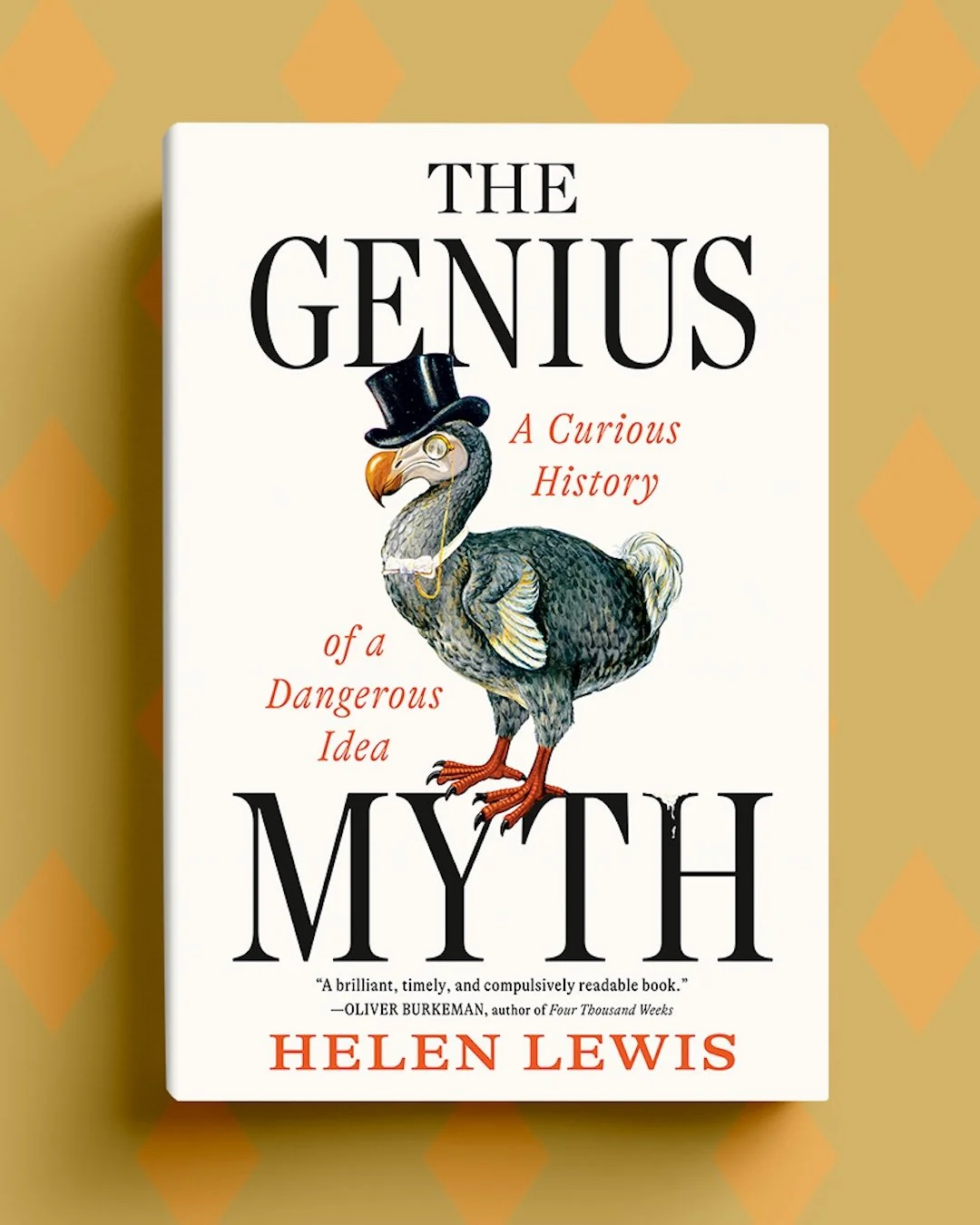
Widely and mostly positively reviewed, Helen Lewis’s book The Genius Myth seeks to debunk the notion of genius—at least the view of genius as a person who possesses special—perhaps indeed unique—powers, abilities, capacities, insights, achievements, legacies.
Lewis has made a persuasive claim that the label of “genius” has been bandied about too much; it needs to be analyzed, deconstructed, perhaps put into the dugout, at least for a while. She critiques often-cited examples of geniuses (Thomas Edison and Elon Musk, in particular). Lewis shares her observation that writers and observers of so-called geniuses are prone to highlight the positive while minimizing the often flagrant (e.g. anti-social) flaws of these honorees. In the sizeable literature on extraordinary promise and achievements, there is a bias toward males who died young, individuals who suffered from deadly illnesses, persons who claimed to have sudden insights, discoveries, messages from “on high.” (Compared to male writers such as Lord Byron or John Keats, female writers such as Jane Austen, Emily Dickinson, George Eliot—the pseudonym of Mary Ann Evans—have rarely been cited.)
Lewis also calls attention to the role of self-promotion: In her judgment, Timothy Berners-Lee, the inventor of the World Wide Web, is as important a figure as Elon Musk—but because Berners-Lee does not call attention to himself, he rarely gets touted as a genius. Perhaps most convincingly (at least for me), Lewis identifies the sins of omission and commission in several of the best-known researchers on genius—all men, most often psychologists—typically proceeding in ways that do not withstand scrutiny and may even violate basic principles of inquiry and reporting.

Timothy Berners-Lee, inventor of the World Wide Web
On Lewis’s account, there is not and should not be a special category of genius—an individual (or, rarely, a group) with unique characteristics and world-shaking achievements. As her opening (and compelling) case, she dwells on Giorgio Vasari’s Lives of the Artists—a collection of biographies of painters and sculptors who worked chiefly in Italy at the height of the Renaissance. On her account, Vasari’s authorial need to tell a convincing story triumphed over accuracy and prudence—and Vasari launched a trend in the potted biographies of artists which eventually spilled over to other sectors, ranging from science to politics. Indeed, examples of “genius celebration” extend to our time, where the achievements (and, at times, the flaws) of geniuses are celebrated in biopics—e.g., individuals like physicist Robert Oppenheimer, mathematician John Nash, musician Leonard Bernstein, painter Vincent van Gogh—the roster of biopics grows steadily.
As someone who himself has thought a lot about outstanding achievement, and has occasionally invoked the word “genius,” I approached Lewis’s book with some apprehension. Over thirty years ago, I published a book called Creating Minds: An anatomy of creativity seen through the lives of Freud, Einstein, Picasso, Stravinsky, Eliot, Graham, and Gandhi. In that work, I described and illuminated the achievements of individuals who—respectively—epitomized each of the “multiple intelligences” that I had recently proposed. If the word “genius” appears in the text, it must have been only in passing—it did not make the subject index! Yet, I clearly felt that all of the individuals—born in the latter part of the 19th century and productive during the earlier years of the 20th century—were special, worthy of study, capable of being better understood. And if I or someone else had used the word “genius” to refer to any member of the septet, that would not have caught my attention or bothered me.
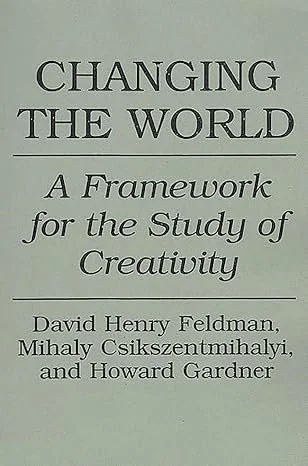
Fortunately, however, owing to my long term, rewarding collegiality with psychologist Mihaly Csikszentmihalyi, I do have a way of thinking about great achievements—indeed, of genius. On the analysis which Mihaly first introduced—when collaborating with David Henry Feldman and me—Mihaly spoke of creativity as involving three factors:
an individual (the aspiring person or, occasionally, group);
a domain (the area in which the individual is working—e.g., art, science, politics, business);
a field (a group of knowledgeable individuals—could be as small as a few fellow scientists, or as large as the viewing public—who determine that a creation is worth considering, studying, valuing, preserving).
The individual alone does not suffice (X may or may not be creative, despite what the individual may think of himself or herself); nor does it suffice for the individual simply to work in a particular domain (e.g., art, scholarship, politics, etc.). Only when knowledgeable individuals—members of a relevant discipline or field—conclude that an artifact (in the broadest sense of that term) is worth valorizing can we dub it as creative. And by extension, we can and should apply the descriptor “creative” only to individuals whose words or works have come to be valued by knowledgeable others.
As I’ve occasionally quipped: You may die before the field decides that you are creative. But you will never know for sure that you are not creative…because that decision can be made years, even decades later. As examples, Bach’s music was not widely appreciated until Felix Mendelssohn brought it to public attention well over a century later. The same post-mortem descriptor applies to the paintings of Vincent van Gogh or, in our time, the drawings and paintings of Hilma af Klint. To risk invoking the wrath of Helen Lewis, we could say that their genius was only recognized post-mortem.
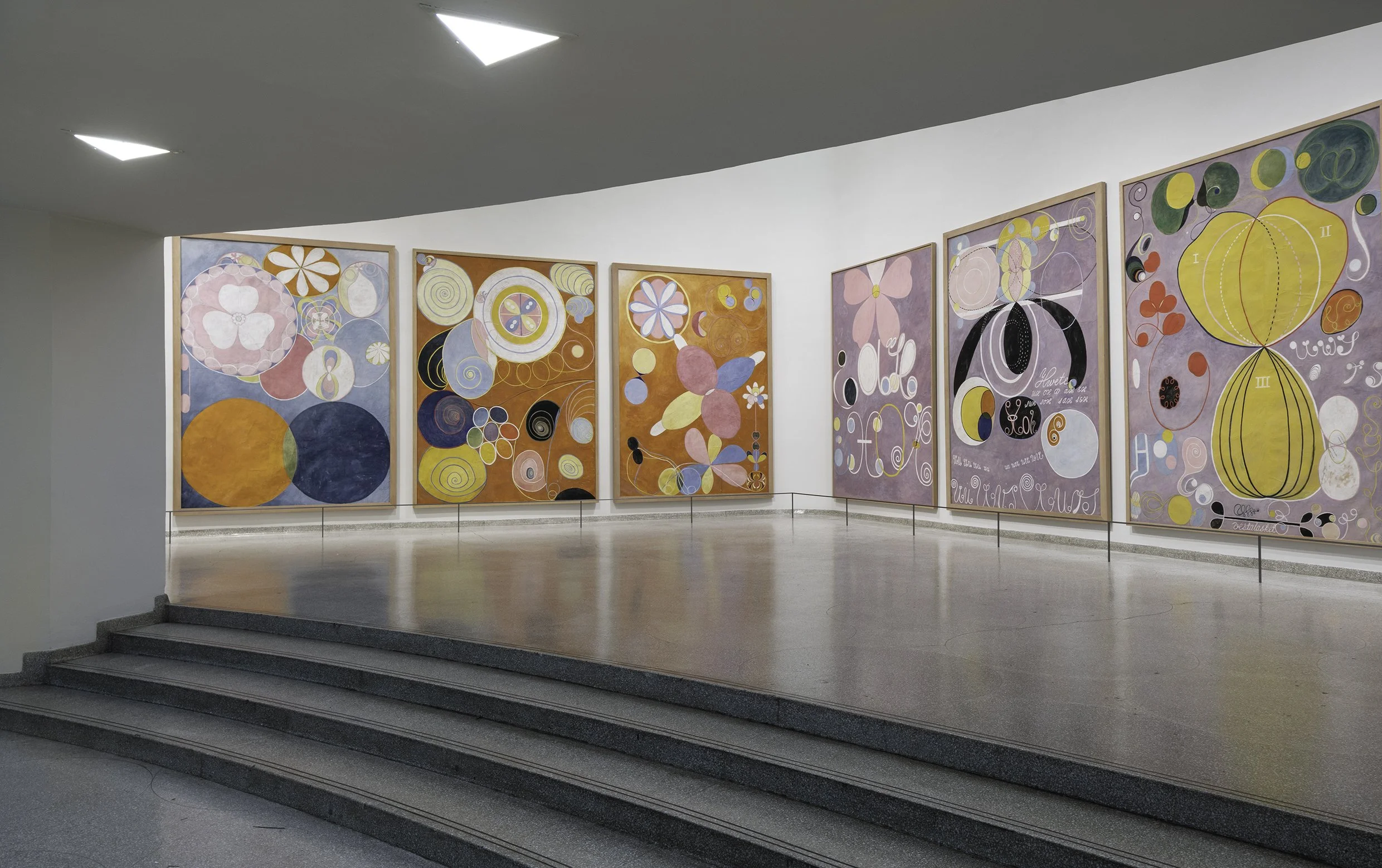
Hilma af Klint exhibit at the Guggenheim Museum in NYC
Finally, a few of my own thoughts about the term “genius.”
To begin with, in English we are probably stuck with it—at least until a synonym arises.
While Helen Lewis puts forth her own views forcefully, she does not do justice to earlier scholarly work on the concept of genius—dating back to classical times and having undergone various mutations. For a fine historical examination, I recommend Divine Fury: A History of Genius by historian Darrin McMahon.
When I’ve used the term “genius,” I have sought to extend it to those rare individuals who perceive something about the world, about life, about time—and who thereby affect the ways thereafter in which their successors (individuals, generations) conceive of the world.
Often, I think of Sigmund Freud, whose work I studied when I was young. Freud himself was credited with many discoveries—not all of them valuable, not all of them valid—but writing on the significance of dreams, Freud reflected: such insights occur “but once in a lifetime.” Moreover, Freud’s own teacher, Josef Breuer, commented that when he watched young Sigmund Freud over time, Freud reminded him of a bird who soared ever higher into the sky.
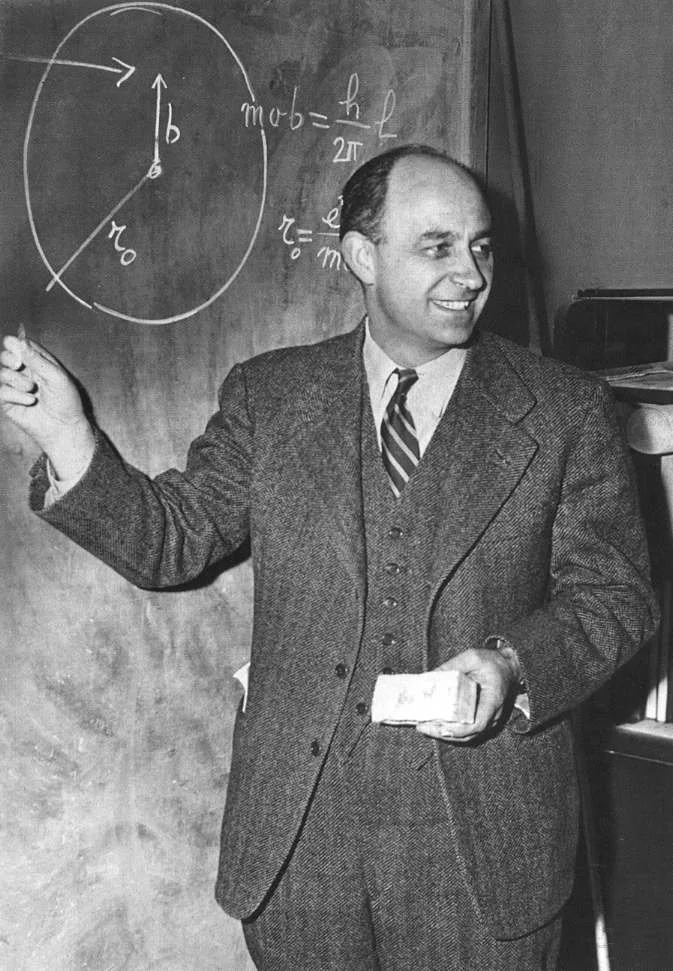
Enrico Fermi
To be sure, Helen Lewis might use these observations as an example of the “myth of genius.” But if anyone in my own field deserves that accolade, Freud does. And I have had the same sensation about a young colleague in my field—whenever I am with her, I sense her own bird soaring ever higher in the sky…and I stand in awe. But of course, unless the “field” recognizes her achievement—sooner or later—I could simply be making a misjudgment.
Recently, I had the privilege of posting the question of genius to Gerald Holton—a world renowned scientist, scholar, and historian of physics. Born in 1922, Gerry has been around for a long time—he has known dozens of Nobel Prize winners, he was a major biographer of Albert Einstein, and he has an amazingly broad conspectus.
When I asked Gerry who—among the individuals he knew personally—was a genius, he thought for a few moments and said, “Enrico Fermi.” To paraphrase Gerry: “When there was a problem that some of us were puzzling over and could not make headway, we would bring it to Fermi. He would ask to have a quiet space for an hour or so, ponder it in various ways, and—more often than not—come up with a solution that eluded the rest of us and stood the test of time.”
One may choose not to call that genius—but if so, one will simply have to come up with a new and acceptable descriptor—for example, “extraordinary minds,” (Gardner 1997).
My conversation with the author, Helen Lewis
After posting this blog, I shared my thoughts with the author of “The Genius Myth,” Helen Lewis. Below, please find our brief email conversation, in which she thoughtfully shared her comments.
HOWARD:
Dear Helen (if I may),
I hope this message finds you well.
I read your book The Genius Myth with considerable interest and found myself inspired to write a blog detailing my thoughts and reactions. In case you would like to read it, I'm sending along the link here. As you may know, I've written a great deal about creativity and “extraordinary minds,” though I don't that I've often used the word “genius.”
With best wishes,
Howard
HELEN:
Dear Howard,
Thank you for such a thoughtful reflection on the book. I’m sorry you didn’t find that I had done the earlier literature justice — I very much enjoyed Darrin McMahon’s book, but I think I got bogged down in some of the more anecdotal historiographies (such as the work of Dean Keith Simonton) and bailed out. Any recommendations for work that you’ve found valuable very gratefully received!
I particular liked what you said about rediscovery and renewal of great creative minds. It’s one of the pleasures of journalism (and I suspect academia) to inflict your enthusiasms on fresh audiences.
Best wishes,
Helen
HOWARD:
Thanks for your timely note, much appreciated.
As you could tell, your ambitious and challenging book stimulated several trains of thought.
In my own work on this topic, I have relied heavily on authoritative biographies and also on studies of gifted children, such as those undertaken by David Henry Feldman and by Ellen Winner, my wife. The relation between early outstanding performance, on the one hand, and ultimate pathbreaking achievements on the other, are of particular interest to me—as a developmental psychologist...and, now, as a grandfather.
More recently, being well into my ninth decade, I have been revisiting my books about creativity, leadership, and “extraordinary minds.” The question I've asked myself: To what extent were my choices time-bound, even parochial? If I were to undertake studies today, well into the 21st century, what domains/sectors would I look at? Do I know enough about finance, investment, computing, technology, to determine who is worth studying and how would I study them?
Or, to put it in less academic jargon, are there still lessons to be learned from the lives and achievements of Mozart, Leonardo, Shakespeare, Newton in the age of AI...and AGI?
With all good wishes,
Howard
HELEN:
That's a great question. One of the theories that I came away agreeing with was the idea of particularly fertile periods in particular disciplines, and how lucky people are to be born at the right time for them to do their best work. I suspect that machine learning is at that stage currently, but sadly it's far, far outside of my comprehension. I also do feel that this is a bad time to be interested in longform reporting, as I am, because although The Atlantic is happy to invest time and money in my work, it's hard to excel without a friendly ecosystem of peers and readers. (Both of those groups have shrivelled significantly in the smartphone/big tech age.)
You must be pleased with how your own work has prompted such a vigorous debate, I hope? My husband and I use the modern equivalents of MI to describe how different we are: I'm a "wordcel" and he's a "shape rotator."
HOWARD:
Dear Helen,
Thank you for sharing these reflections with me. Yes, "MI theory” often gets a boost when members of the same family or working group discover that they have different and perhaps complementary profiles of intelligences.
I would like to ask if you would grant me permission to reproduce your valuable comments on the posted version of my blog—I believe they'll be of interest to my readers and I may build on these ideas in the future.
ACKNOWLEDGMENTS
For valuable comments on an earlier draft, I thank William Damon, Kirsten McHugh, Annie Stachura, and Ellen Winner.
REFERENCES
Csikszentmihalyi, M. (1996). Creativity: Flow and the psychology of discovery and invention. HarperCollins.
Gardner, H. (1993). Creating minds: An anatomy of creativity seen through the lives of Freud, Einstein, Picasso, Stravinsky, Eliot, Graham, and Gandhi. Basic Books.
Gardner, H. (1997). Extraordinary minds: Portraits of exceptional individuals and an examination of our extraordinariness. Basic Books
Lewis, H. (2025). The genius myth: A curious history of a dangerous idea. Penguin Random House.
