Theater
© Howard Gardner 2026

Dating back to adolescence, I have loved going to the theater—seeing works of drama as well as what are generally called “musicals.” I went with my parents, friends, and often alone. When I was travelling to New York or London, I would often arrange my schedule so that I could see both a matinee and an evening performance on the same day. For decades, I saved the cover page of every playbill as a memento. I very much regret that when my wife and I “downsized” six years ago, I foolishly tossed these playbills, virtually assuring that—in the absence of strong cues—I would never remember most of the plays that I’ve seen. (My daughter Kerith has inherited or assimilated the “play gene”—and I hereby counsel her to retain mementos of each session at the theater. Knowing her quite well, I am confident that she does not really need this bit of advice!)
I cannot say that I was a formidable student or critic of “the theater.” Having usually done a bit of research on what was currently offered on Broadway or in the West End, I was generally able to anticipate experience. I liked what most audience members and most critics liked—and in most cases, my dislikes or criticisms had been anticipated by others. Indeed, over several decades, when asked which play should have been more favorably received and more fondly remembered, I have generally cited “The Comedians,” (1975, by Trevor Griffith)—hardly obscure but rarely listed as a great play by a major playwright. And I suspect that preference also reflected the quality of the performance I had seen, and the fact that, at the time, five decades ago, I was particularly interested in the theme and the personalities depicted in the play.
But my focus here is elsewhere…on two cases where my own reactions and/or evaluations differ significantly from those of most theatergoers (and most critics). In one case, I have failed to value sufficiently the talents of one of the most lauded theater creators of our time. In the other case, I have joined in the valorization of a theatrical creator—but for reasons somewhat different from those proffered by most attendees.
Not to be mysterious—I have not really liked a good many of the mature works of playwright-and-composer Stephen Sondheim (1930-2021); and in the other case, I have greatly valued the creations of Tom Stoppard (1937-2025).
Stephen Sondheim is the ultimate New Yorker—born and chiefly raised in Manhattan and never far away from Broadway for very long. As a young composer, Sondheim was most influenced by Oscar Hammerstein, who, with Richard Rodgers, created many of American’s most beloved musicals: Oklahoma, South Pacific, Carousel, just to name three of the best known. Sondheim initially provided the lyrics for West Side Story (1957) and Gypsy (1959), two musicals that I loved. He also was both the composer and the lyricist of A Funny Thing Happened on the Way to the Forum (1962)—another play that I esteemed for some of the same reasons that I appreciated the works of Rodgers and Hammerstein (and other artists, like Jerome Kern and Irving Berlin).
Perhaps paradoxically, it is his more mature works—A Little Night Music (1973), Sunday in the Park with George (1984), Company (1970), and Sweeney Todd (1979), that failed to move me and that I have never valued highly. I make an exception for Into the Woods (1987) which I did value.
I am not so much of a philistine to conclude that I am right and the public is wrong—and so I bought the sheet music for most of Sondheim’s works. And after studying (and attempting to hum) the scores, I came to a conclusion that at least satisfied my own curiosity for a while: Sondheim’s musical compositions seem to be valued more for their lyrics—which are extremely clever and sometimes border on profundity—than for the melodies that he created. The melodies are too monochromatic, too repetitive, too extended, too challenging for me to whistle, to hum, and to remember (as I can for many works by Rodgers and Hammerstein, or Lerner and Lowe). And perhaps it is for that reason that I had not sufficiently appreciated Sondheim’s works,
As a quick means for testing my hypothesis, I asked two AI entities whether Sondheim’s works are appreciated in non-English speaking countries. I learned, perhaps not surprisingly, that his works do not do as well in societies where knowledge of English is modest.
But that’s not the end of my story, my personal mini-drama…
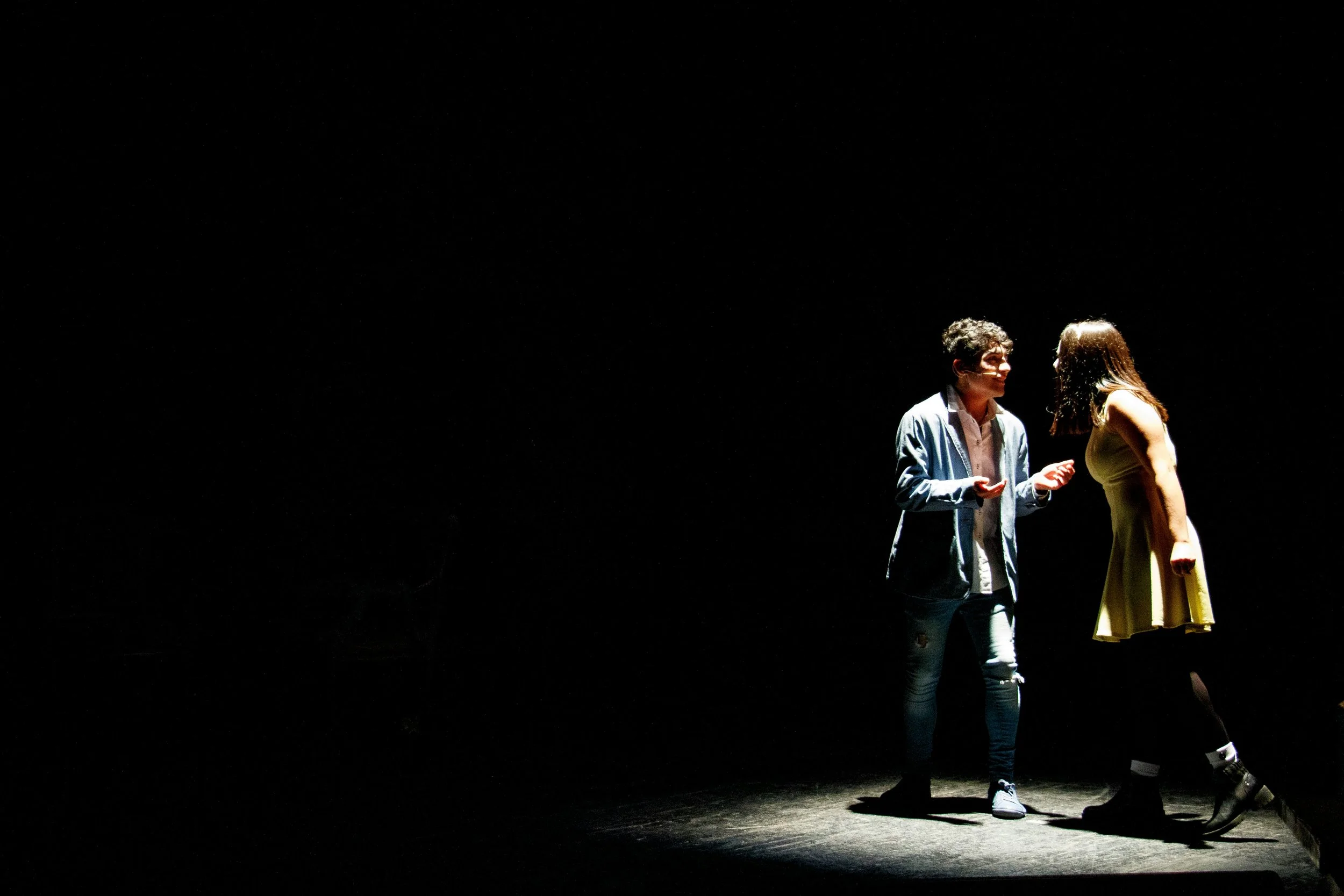
Switching to the work of Tom Stoppard: Ever since I attended his first play “Rosencrantz and Guildenstern Are Dead,” I have valued his plays. I have attended most of them, have read some of the remaining ones, urged others to catch a performance. Once I found myself seated directly in front of him at a theater that was performing Jumpers. Immediately recognizing him, I handed him the playbill and he promptly signed it. (I treasure this possession—one bit of theater memorabilia that I have NOT chucked!) At another time, my wife Ellen and I waited for him outside of the theater after the completion of a performance. He came over and spoke to us for a few minutes. His first question: “Do I know you?” When I mentioned the playbill of Jumpers that he had signed many years ago, he immediately asked me whether I had seen the performance in New York or in London. I was pleased to respond: “In the West End.”
Of course, so far, I come off as just an ordinary fan of a widely admired playwright. But I believe that I’ve valued not only the wit of Stoppard’s plays, but also the wisdom. While his theatrical works are usually considered amusing and quick-witted, I also deem them as wrestling with deep issues—the nature of love in “The Invention of Love,” the potency (for good or ill) of political ideas and ideologies in the “Coast of Utopia,” the power and perils of enduring cultural identity in “Leopoldstadt,” a contemporary riddle of philosophy in “The Hard Problem.” And all of the above in “Arcadia”!
Stepping back:
As I am not in any sense an expert on theater, I thought it important to learn how those more familiar with these artists thought and wrote about their work. The secondary literatures on both Sondheim and Stoppard are massive, so I just dipped into a few works.
Very valuable was Dan Okrent’s book Stephen Sondheim: Art Isn’t Easy. Sondheim was indeed trained by Oscar Hammerstein and for a while the younger artist was content to be a protégé. But Sondheim wanted to go well beyond Rodgers and Hammerstein (and their contemporaries)—guiding musical theater toward more complex and less resolved personalities and world views. Rather than contrasting good and evil, love and hatred, ordinary gender identity and counter-identity, he sought to capture these ambiguities in his themes, his melodies, and—perhaps particularly—his lyrics. Rather than composing tunes which one could whistle readily upon leaving the theater, he created words and melodies that were less easily assimilated—filled with ambiguities and lacking resolution.
If I wanted to caricature myself, I would say that I have been trapped in the aforementioned musicals of the middle of the 20th century, while Sondheim has sought to usher in more complex and less easily recalled and summarized artistic creations. (But for a lighthearted suggestion that Sondheim may also be dated, see Eisenberg, 2026.)
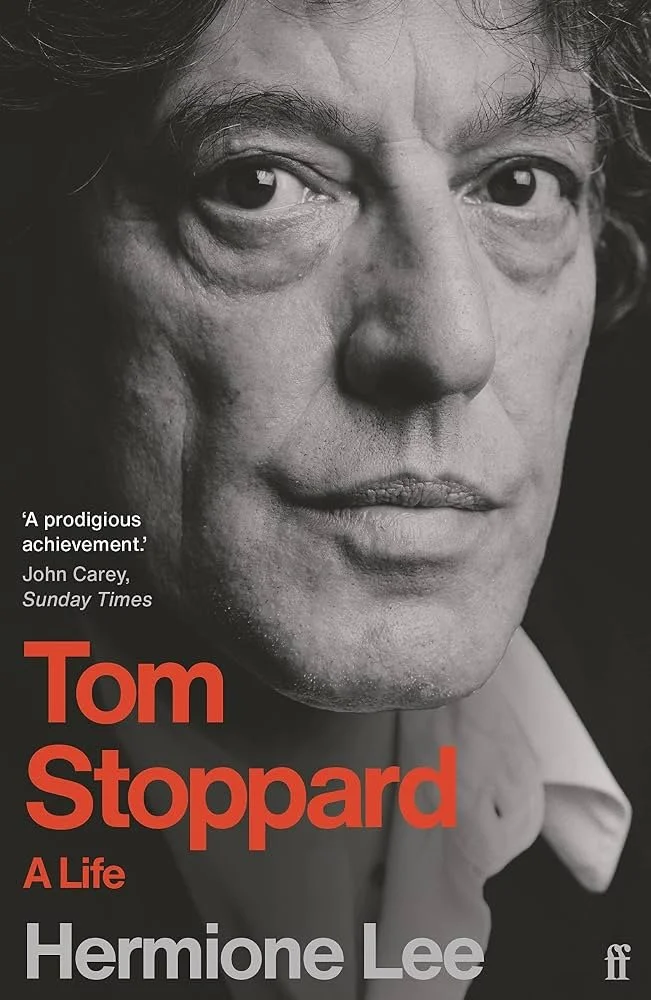
To complement the Okrent book, I turned to Hermione Lee’s biography of Tom Stoppard, as well as Jonathan Gaisman’s essay “Stoppard contra Stoppardianism.” Stoppard’s life was easily as complex as Sondheim’s (gay but closeted for much of his life). Born in Czechoslovakia, Stoppard was the offspring of two Jewish parents but did not learn of his religious identity (at least consciously) until mid-life. He did not attend university but instead began as a journalist. He had several marriages and many liaisons. To be sure, he found it relatively easy to write amusing lyrics and scripts (including, for the movie Shakespeare in Love) but in much of his work, he strove to wrestle with the most difficult philosophical questions and conundra.
I am not a philosopher! But I was greatly influenced by Nelson Goodman, the philosopher who launched Harvard Project Zero (where I have worked for six decades). When a magazine or newspaper arrives, I typically turn to reviews of books in philosophy… and occasionally wrestle with the actual texts under review. And so, when I read, attended, and/or thought about Stoppard’s plays, I often found myself thereafter reflecting on the nature of life, love, politics, the arts in a deeper way. And while Stoppard cannot claim to be the equal of Shakespeare (a standard likely to stand for all time), he is definitely the equal of George Bernard Shaw—as skilled at gaining laughs but more profound, and sometimes more explicit, about the nature, importance, and complexity of deep philosophical issues.
Out of fairness to Sondheim, it can be argued that he too is concerned with vexing issues (e.g. the complexity of social relations, gender identity, family ties)—including some that I have associated with the works of Stoppard. But for whatever reasons, his plays do not beckon me to share his consciousness—a standard that I find myself applying to all works of art to which I’ve devoted considerable time.
Enough about my own undoubtedly idiosyncratic views of the theater in general—and a passing glance at two outstanding creators who have justifiably been valued by audiences and critics. If this essay/blog stimulates reflections on why our own tastes and preferences sometimes echo those of others, but deviate at other times, it will have served its purpose—and I will be gratified.
ACKNOWLEDGMENTS
For valuable comments on an earlier draft, I thank Kirsten McHugh, Annie Stachura, and Ellen Winner.
REFERENCES
Eisenberg, J. (2026). I give my kid the talk. The New Yorker.
Gaisman, J. (2026). Stoppard contra Stoppardianism. The New Criterion.
Lee, H. (2020). Tom Stoppard: A life. Knopf.
Okrent, D. (2026). Stephen Sondheim: Art isn’t easy. Yale University Press.
