What Poetry has Meant to Me
It’s been almost a decade since I stopped teaching at the Harvard Graduate School of Education. But I am still active in research and enjoy interacting with current and past students.
A year ago, I was walking with my family around the attractive grounds of the Harvard Business School. We wanted to take a family photo and a kind young woman seated nearby offered to take the photo. I assumed that the volunteer photographer was a student at the Business School, but in fact, it turned out that Shreeya Pradhan was a new student at the Graduate School of Education. Both my wife Ellen and I are still associated with Harvard’s Project Zero, well known for its work in education in the arts.
Anyway, we enjoyed our subsequent interactions with Shreeya. When we learned that she was interested in poetry, she undertook an independent study with Ellen. This course focused on young children’s understanding of and desire to be involved in some active way with poetry. Given the successful completion of the course, we invited Shreeya to write a pair of blogs—which it’s our pleasure to feature: the second one will be posted in two weeks.
—HOWARD GARDNER
© Shreeya Pradhan 2026
When I was growing up in India, poetry was never a significant part of my schooling or academic life or indeed, any part my young life. Yet somehow, without knowing exactly where it came from, poetry became my most natural form of expression from the time I learned how to write. While poetry came naturally to me, it was not because I was surrounded by it. Poetry was rarely taught in a meaningful way, and it certainly wasn't something that played a central role in my learning.
As a child, I loved writing. I wanted to capture anything that stuck with me, in fact all my experiences, in some form of writing. I also loved reading, and at one point language itself started to feel amusing. Words felt different when I wrote them as compared to when I read them. I started playing with language at that time—and playing with language meant making rhyming words or finding rhyming words to put together.
I had seen a lot of rhyming words in poems, so poems at that time meant rhyming words to me. I gravitated to rhyming words, which eventually meant that I was writing poems. And rhyming words are still a large part of what poems are to me today. When I started writing poems, it was not with the intention of wanting to write a poem or to become a good poet. It was simply having fun while writing, playing, and trying to capture and put across something that felt meaningful to me.
Given the traditional rote-learning style of schooling in India in decades past, poetry wasn't encouraged. I remember writing poems in the back of my books when the teacher wasn't looking or curling up on my sofa to write after coming back from street play with my friends. It wasn't something that I wanted to show people. It was just something I truly did for myself, often tucked away in my corner.
That said, I do remember getting a lot of appreciation from my parents and grandparents whenever I showed them my poems. In second grade, I also had an English teacher who spoke to me in a way that made me feel she genuinely enjoyed my poems—that felt good! However, for the rest of my school years, poetry writing was not something that was encouraged. Writing a poem meant I wasn't really doing work. I was often encouraged to keep poetry as a hobby, a nice thing to have alongside the "real" work of life. And as a child in a fairly traditional school setting, I didn't think to challenge that idea.
As I grew older, poetry started to feel like more than four lines I was writing on a piece of paper. It became just about everything that was happening before those lines came to life. It was all the noticing, observing, thought patterns, thoughts forming and deforming, picking up a thought before it drops, holding one, brewing something for a little while longer, sitting with it before drawing a conclusion. It was so much more than the final words.
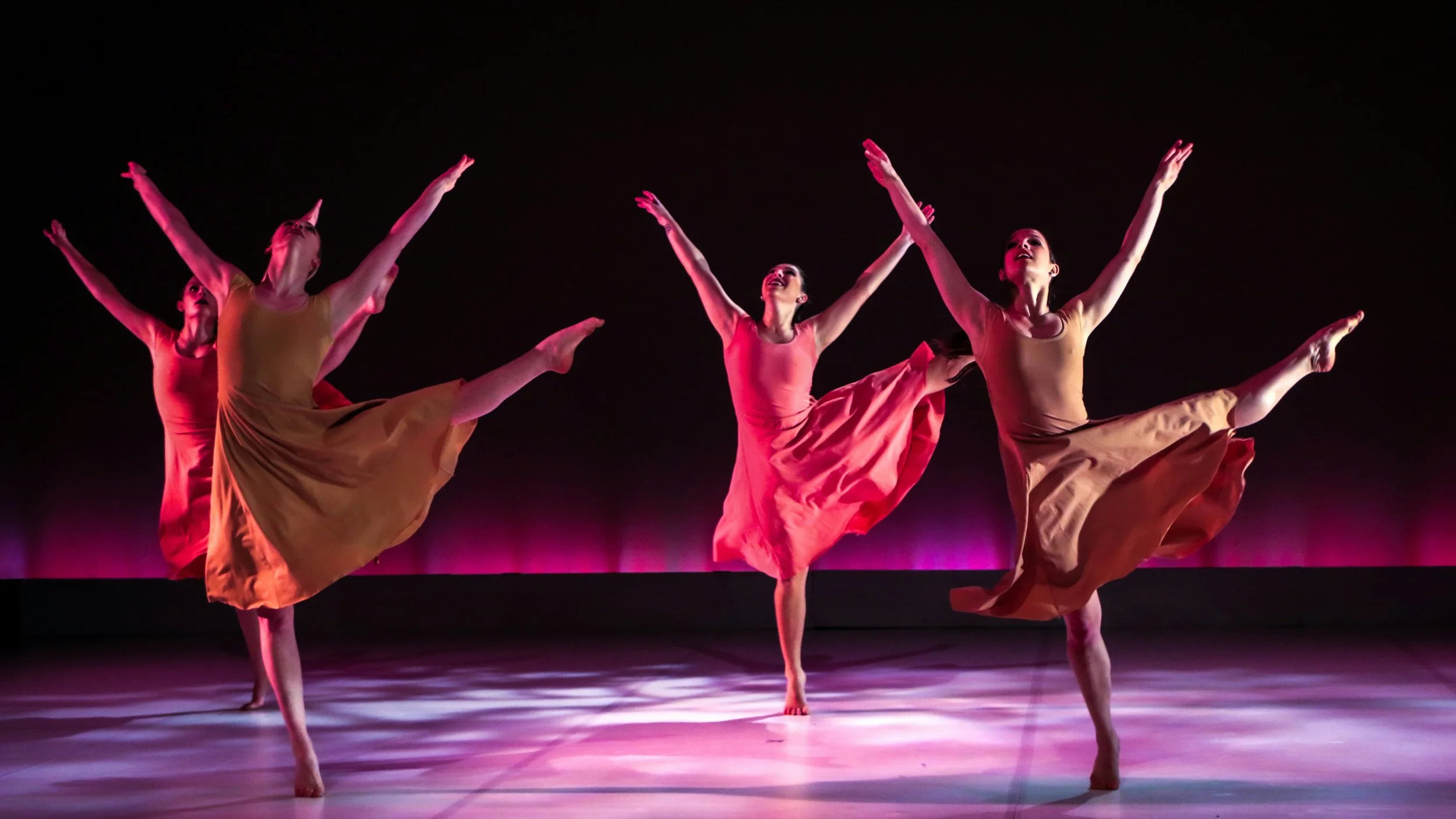
That led me to think that poetry isn't just about verses on paper. Poetry can be found in so many things. It can be in the way someone moves, in the way someone cooks, in the way someone hits a tennis shot, in the way someone takes care of their baby, in the way someone sets up their house, or in the way someone decides on the culture for their workspace. Poetry can be so many things! I started seeing endless possibilities.
At that point, it didn't seem fair to confine poetry to paper. I often wondered why poetry as an art form was not as widely loved as other art forms. Why do so many people love movies, theatre, music, and orchestras, yet poetry doesn't seem to receive the same affection? While exploring this question, I spoke to many people and realized that poetry feels rather one-dimensional to some. It feels boring because of the way it is taught in schools. Some people feel that poetry requires a certain level of intelligence, that it is something that needs to be decoded by someone who possesses the code-book!
And so, in 2023, to open the world of poetry to people around me, I curated a show in India to give poetry life. I collaborated with twelve artists from around India, each working in a different art form. There was photography, embroidery, animation, dance, music, pottery, weaving, candle-making, cooking, fabric art, and painting. Together, we explored how poetry is not just something we see on paper. I began wondering if this is also why poetry has always felt much bigger to me than writing. The theory of multiple intelligences suggests that human beings make meaning in many different ways: through language, movement, music, visual imagery, relationships, nature and reflection. I wonder if poetry can be one of the few practices that invites all of these ways of knowing.
Sometimes, a poem begins with an image before it becomes a sentence. Sometimes, it begins with a rhythm before there are words. Sometimes, it is in movement before it lives on paper. Poetry seems to ask us to observe closely, to imagine freely, to listen, to feel, to connect, and only then—perhaps—to speak. Then, poetry is not simply an exercise in linguistic intelligence, it becomes a way of exercising many of our ways of knowing the world at once.
To me, poetry is the way in which we function. It is the way in which we look at the world. It is the way in which we, as humans, come together to form an ecosystem. It is in so many things, and it is so many things.
When I think about poetry, so many thoughts come to mind. First, I think it is an epistemic tool—a thinking device—because it helps us understand something or expand something. It shows us the texture of our thoughts. It makes the texture of learning visible. It has shown me how to make sense of experience. It is also, according to me, a way of tracing thought—cognition, reflection, imagination, emotion, wonder—everything that lies beneath logic. It is also a way of knowing, a method of inquiry. It helps us see what we know and how we know it. Poetry helps reveal the emotional and intuitive dimensions of things.
If thinking is the act of making patterns, poetry is the act of discovering them through noticing, feeling, imagining, and wondering. I often think of poetry as a cognitive map that helps us navigate the space between sensing and knowing. It allows us to sit with ideas before they become fully-formed, before language neatly organizes them. In doing so, poetry reveals what often remains hidden—intuition, emotion, wonder, and the subtle movements of thought beneath logic. That, according to me, is what makes poetry so meaningful. This is also why I think it can be so powerful for children, because so much of childhood exists in this space of sensing, wondering, imagining, and making meaning before thoughts become fully-formed. Poetry offers a way to make visible that way of being in the world.
Regarding poetry in India, it has a long history dating back to the Vedic times. Many Indian poets have been inspired by mystical experiences, and poetry is among the oldest forms of literature. Across traditions such as the Vedic hymns, the Bhakti movement, Mahabharata poetry has been understood not just as literature, but as a way of seeking meaning and thousands of years of exploring the human experience.
Despite India's rich poetic traditions, that wasn't the relationship with poetry I experienced growing up. In my own schooling and the circles around me, poetry was often treated as a good-to-have hobby rather than a meaningful way of thinking or understanding the world. It was something you could do to pass time, put on a wall, or write for someone. I have come to believe it is much more than that. I also recognize that there are many communities and families where poetry occupies a much more central place.
Sometimes, poetry is positioned as something that needs to be deciphered, something meant for the elite rather than the ordinary person. I don't believe that at all. If poetry lives in noticing, wondering, feeling, and making meaning of our experiences, then poetry is perhaps one of the most democratic forms of expression we have. It is for all of us. That belief led me to explore what might happen if we stopped teaching poetry as a literary form and instead invited children to experience it as a way of noticing, thinking and being.
In the accompanying paper, I turn to that question.
The second blog in this two-part series, “Activating the Poetic Muscle in Children,” will be posted soon.