How I See Leadership Today
© Andre Nudelman 2026
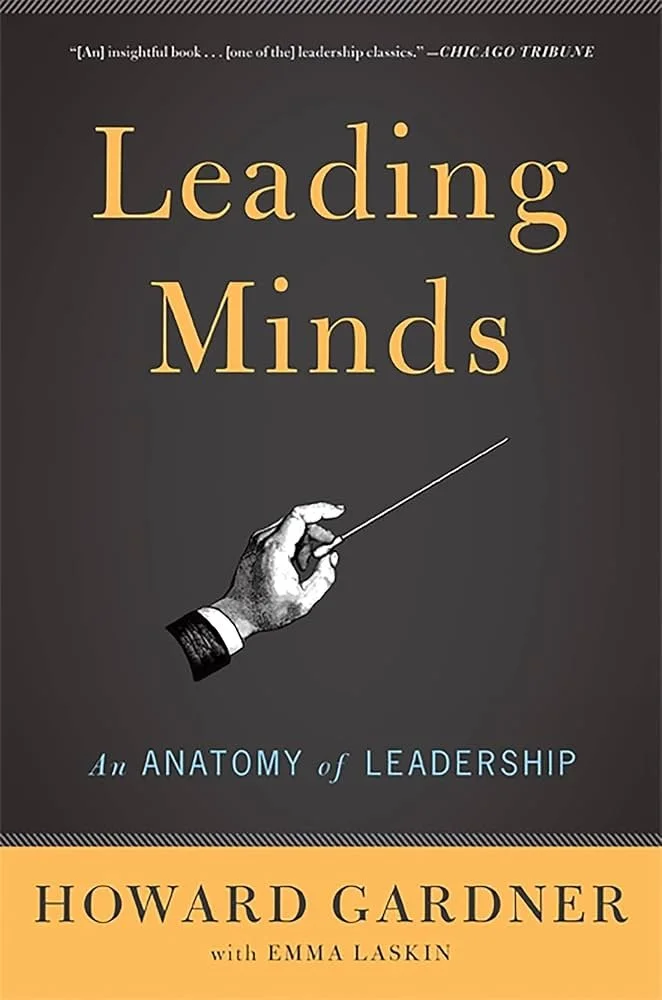
When I first read Leading Minds: An Anatomy of Leadership decades ago, I was in the middle of building businesses, hiring teams, raising capital, and making decisions that felt urgent and irreversible. I remember closing the book with the uncomfortable realization that leadership was not about authority or charisma. It was about narrative. It was about the stories leaders construct—and the stories followers choose to believe.
Howard Gardner argued that leaders are effective not simply because they hold power, but because they frame reality in ways that resonate deeply enough to mobilize others. That idea has never left me.
Today, I find myself confronting a world that feels radically different from the one in which I first encountered his work. And yet, at its core, leadership remains an act of storytelling. What has changed is the speed, the scale, and the volatility of the stage.
Leadership used to emerge slowly. For the most part, it was forged inside institutions—schools, universities, companies, governments. It required apprenticeship. It demanded endurance. Reputation accumulated through visible effort over time. A leader’s authority was tested in rooms, not feeds.
Now leadership can emerge overnight.
A teenager with a laptop—or a phone!—can influence public opinion. An entrepreneur with a compelling thread can build a movement before building a company. A founder can raise millions on the strength of a story long before a product exists. In the field of education—in which I’ve worked in numerous capacities—I see it constantly: young voices shaping conversations about AI in classrooms, the future of learning, the purpose of school itself.
But velocity is not the same as depth.
Leadership today is often formed in public rather than in private reflection. Identity is curated while it is still being constructed. Narratives are projected before they are fully lived. Social media has democratized influence—a profoundly positive development in one sense—yet it has also compressed the timeline between self-concept and mass exposure.
When I work with entrepreneurs or educational leaders, I often sense a quiet anxiety beneath the surface: not just “What should I build?” but “How should I be seen?” Visibility has become a currency as salient as value creation.
Execution, too, has been transformed. In the past, leadership required the management of strategy, people, and operations. Today, leaders must manage perception with equal deftness. Decisions are interpreted instantly. Missteps are archived permanently. The feedback loop between action and judgment has collapsed into minutes.
In education, especially as AI reshapes classrooms, leaders must make decisions in an atmosphere thick with uncertainty. If you adopt technology too quickly, you are reckless. If you hesitate, you risk becoming obsolete. The margin for quiet experimentation has shrunk. Any move can be interpreted as a philosophical stance.
Entrepreneurship feels similar. I have lived through cycles where boldness was celebrated and others where prudence was rewarded. Now boldness is amplified algorithmically. The most extreme positions often travel farther and faster than the most thoughtful ones. Leadership is increasingly rewarded for emotional charge rather than intellectual coherence.
Social media does not just amplify leaders; it reshapes them.
Platforms reward clarity, speed, and confidence. Doubt does not trend. Nuance does not go viral. A carefully edited thirty-second video can project conviction without context. A thread can simulate wisdom without experience. The line between leadership and performance has blurred.
And yet, amplification can also be a force for good. I have seen educators in small towns reach global audiences. I have seen entrepreneurs rally support for meaningful change. I have seen AI researchers spark critical ethical debates that might once have remained buried in academic journals.
Tools themselves are neutral. What they magnify or distort depends on what already exists.

What worries me far more is the rise of fictional leadership. We are entering an era where identity can be constructed with astonishing speed and amazing precision. AI can generate speeches, refine tone, simulate expertise, and even create authority. A leader’s digital presence can be polished beyond recognition. Charisma can be engineered.
The key question: In such a world, how do followers distinguish between lived competence and algorithmically enhanced persuasion?
This question is not theoretical. It affects our schools, our companies, and our democracies. When students grow up consuming leaders primarily through screens, they may learn to evaluate leadership by aesthetic or personality factors rather than substantive ones. When entrepreneurs measure influence by engagement metrics, they may confuse attention with impact.
The danger is not that leadership becomes more visible. The danger is that it becomes more—or merely—theatrical.
Howard Gardner taught us that leaders and followers engage in a mutual construction of meaning. Today that construction happens at scale, mediated by code. Algorithms now influence which narratives rise and which fade. Leadership is no longer only a psychological exchange; it is also—and perhaps principally—a technological one.
And still, I believe something essential remains unchanged.
Genuine leadership is exhausting. It involves long stretches of unglamorous work. It requires absorbing criticism without collapsing. It demands the discipline to align words and actions over years, not weeks. It forces leaders to confront their own contradictions and reshape a narrative so that is both persuasive and valid.
In my own journey across education and entrepreneurship, I have learned that leadership is less about commanding attention and more about sustaining trust. Trust does not explode. It accumulates. It forms when followers observe consistency between narrative and behavior over time.
If amplification disappeared tomorrow, who would remain a leader?
That question haunts me. I also find it clarifying.
In education, we must cultivate discernment in our students. They must learn not only to consume narratives but to interrogate them. In entrepreneurship, founders must resist the temptation to over-promise in order to attract capital or admiration. In the age of AI, we must ensure that the tools designed to enhance productivity do not hollow out authenticity.
Leadership today is formed in identity, executed in complexity, amplified by technology, and vulnerable to fiction. It demands both narrative skill (drawing on relevant intelligences) and moral discipline (pursuing good work).
When I think back to reading Leading Minds, I realize that Howard was preparing us for this moment without knowing it. He insisted that leadership is ultimately about framing reality in a way that mobilizes others toward shared purpose. That insight feels even more urgent now.
Because reality itself feels contested.

The present age does not lack aspiring and would-be leaders. It lacks coherence. It lacks shared stories that transcend polarization. It lacks leaders willing to trade short-term applause for long-term integrity.
Perhaps that is the provocation of our time: leadership is easier to display than ever before, and harder to embody.
And so I return to the question that first unsettled me decades ago: What story am I telling? More importantly, am I living it?
If leadership remains an act of narrative, then the ultimate test is not how far the story travels, but whether it remains true when the amplification fades.
In that sense, the challenge of leadership has not changed. It has only become more exposed.
Author’s Bio
Andre Nudelman is an entrepreneur, philanthropist, and educator who serves as Entrepreneur-in-Residence at the Stanford Graduate School of Education. Over decades of building educational ventures across different countries, he has remained deeply interested in how leadership emerges, evolves, and shapes institutions in times of rapid technological and social change.
His book The Business of K-12 Educational Excellence will be published by Routledge in September 2026.