How My Research and My Art Coalesced
© Ellen Winner 2026
Part I: The Trajectory of My Career
As a child, I wanted to grow up to be an artist.

EVIDENCE: When I was in second grade, I won a prize for a painting of a man leading a dachshund on a leash—a ticket to a dog show, which I attended with my father. I took Saturday art classes at museums, art classes in summer camp, and visual arts as an elective whenever such options are on offer.
When I expressed a desire to go to art school, my parents (both academics) advised me to first go to a liberal arts college; after that I could go to art school. And so I did, concentrating in English literature at Radcliffe College (then the women’s part of Harvard). When I applied to Radcliffe, I had an interview with a dean who asked me what I was interested in. Art, I said. To which she replied, Radcliffe girls don’t have time for art. Nonetheless, I did find the time to take drawing classes Tuesday evenings in Adams House, one of the Harvard houses—at that time, only for men.
I did go to art school after college—the School of the Museum of Fine Arts in Boston. There, I focused on oil painting, and endured very probing “crit” sessions with one of my painting teachers. Tough but excellent for learning.
Towards the end of my first year, I began to question whether I really wanted to become an artist. Could I make it in the art world? Could I survive the solitary working life? Maybe not, I thought. Almost on the spot, I decided I was not good enough—or maybe also not driven enough, to keep at it. I loved painting but came to realize that I could not see it as a lifelong career…indeed, as a “calling” to which I had to succumb.
What instead? Not English literature, I said to myself. I remember thinking that I did not want to write books about books. In college, I had been impressed with Social Sciences 8—an introduction to cognitive and developmental psychology—and of course, I knew about the great psychoanalyst Erik Erikson, who was spending his last years on the Harvard campus. Without a great deal of reflection—but with a powerful intuition—I turned to psychology, thinking I would probably become a clinical psychologist.
Looking for a summer job, as I was preparing my applications to clinical psychology programs, something serendipitous occurred. I saw a Harvard job posting for a research assistant in the “psychology of art.” I did not know what the psychology of art was all about, but the phrase happened to combine my two interests. And so I applied. The job was for a research assistant working for a Dr. Howard Gardner at a place called Project Zero.
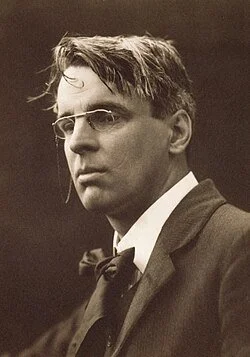
William Butler Yeats
After a few days, I phoned the office to check if my CV had been sent over by Harvard’s HR department. I was not happy to learn that the Harvard HR department had not forwarded my CV. Perhaps they determined I was not sufficiently qualified, as I had only taken one psychology course. Fortunately, the staff member who had answered the phone told me that the day I called was the last day for interviews, but that if I brought my CV over right away she would see that Howard got it.
And that was how I got an interview that changed my life (and, eventually, Howard’s too). When Howard interviewed me, I mentioned that I had written my senior thesis on metaphor in the poetry of William Butler Yeats. I noticed a change in his demeanor. He had recently been awarded a grant from the National Science Foundation to study the emergence of metaphoric capacities/skills in young children. He told me at the end of the interview that if I were willing to make a two-year commitment, I could have the job.
Two years!!! I declined: two years would be too long to wait to attend graduate school. But the next morning, I realized my folly. Two years of research would certainly be very helpful for my graduate school applications—as well as enough time to complete a “real” empirical study. And so, I changed my mind and signed on.
The research that I was put in charge of was not clinical at all. The focus was on children’s understanding of metaphor and their abilities to create/generate metaphors. Also: There was a just completed study on children’s conceptions of art whose data needed to be analyzed. And before long, more studies at a Veterans Administration Hospital where Howard and I looked at metaphor understanding in patients with either right- or left-hemisphere brain damage due to stroke.
I found myself getting hooked on research. And so when I did apply to doctoral programs during my second year at Project Zero, I did not apply in clinical psychology but instead in developmental psychology. I indicated that my chosen focus would be on children’s development in the arts—particularly in verbal and visual arts.
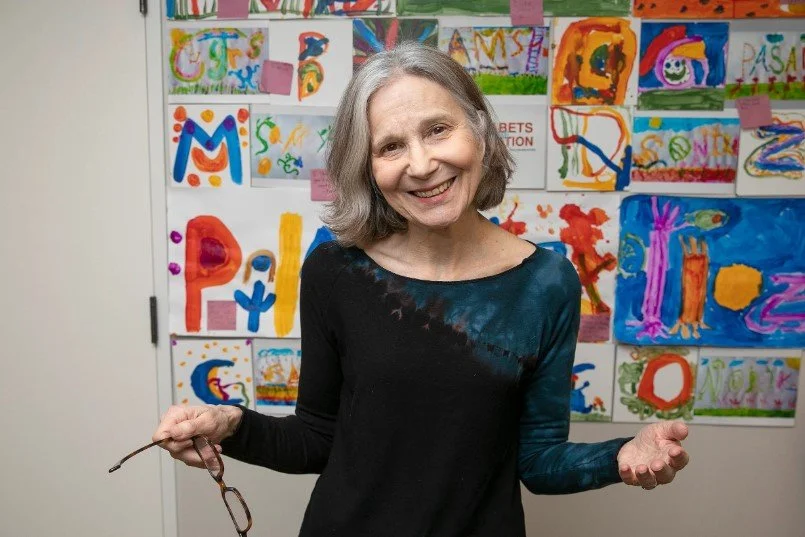
Ellen Winner photographed Jon Chase/Harvard Staff Photographer
In rapid succession: I attended graduate school in Harvard’s psychology department, earned my doctorate (writing my thesis on metaphor production in children’s earliest speech), and joined the psychology faculty of Boston College. I made my way up the tenure—the infamous “publish or perish”—ladder. Before long, I had opened a lab at Boston College and called it the “Arts and Mind Lab.” Over decades, I and my students carried out studies of children’s development in the arts—visual and literary.
Though a full-time faculty member (and, eventually, a three-term department head) at Boston College, I also remained an active member of Project Zero. After about a decade of carrying out studies of children’s perception and production skills in the visual arts and metaphor, as well as children’s perception of aesthetic aspects of the arts (specifically: style, expression, and composition) and child prodigies in the arts, I shifted the focus of my research. Instead of studying development in children of various artistic capacities, I elected to focus specifically on education in the arts.
As a researcher, I had been struck by the steady drum roll of claims about the benefits of arts education—how arts education must be retained in schools because of its direct benefits on test scores and grades. I found these claims difficult to believe. And importantly , I noticed that they were made on the basis of correlational evidence (children who studied the arts did well in school)—not on the basis of experimental studies that allowed causal inferences.

Accordingly, a quarter of a century ago, with my Project Zero colleague Lois Hetland, I carried out a series of meta-analyses on all of the studies assessing the relationship between arts education and academic performance that we could find—since 1950. A meta-analysis combines like-minded studies into one large study. What we found was clear. Correlational studies showed a strong link between art study and academic strengths including SAT scores. That is, students who study the arts also had academic strengths. But experimental studies showed no causal link between art study and academics. That is, when studies compared students who were and were not receiving arts education, those in the art education group did not grow stronger over time academically compared to those in the non-art education group. Thus, we could not conclude that arts education actually strengthens academic abilities.
When we published our findings, we received a lot of negative pushback. We were told that our research should not have been published as it would be damaging to arts education, which needed all possible rationales to retain its position in schools. In other words—bury the bad news.
Lois and I noted that what was missing in the research was systematic study of what is deliberately taught in arts classes by competent mentors. Only with such knowledge could we formulate hypotheses about the kinds of skills that arts training could actually impart. And so, with Lois, and our colleagues Shirley Veenema, and Kim Sheridan, I studied high school visual art classes; our team sought to identify the kinds of abilities that art teachers were trying to instill in their students. We could have picked another art form, but we selected the visual arts as our starting point.
THE WORK: We spent a year filming and interviewing teachers at two high schools where students could concentrate in an art form—the Boston Arts Academy (a public charter high school) and the Walnut Hill School (a private high school). We spent a second year analyzing the data we had collected. As we studied our films of visual art classes, we began to see a pattern: the art instructors were teaching students how to think like artists. Specifically, we contended that they were instilling seven different “habits of mind,” or dispositions, in their students. Here they are, listed alphabetically:
About Art Worlds: Students were taught about art worlds—present and past. This focus helped them to see themselves as working on the same kinds of problems as master artists throughout history—e.g., how to paint light and shadow, how to make a composition dynamic.
Engage and Persist: Students were encouraged to become engaged in projects and to stick with them over time. We saw few “one-shot” projects.
Express: Students were encouraged—even pushed—to put their own personal feelings into artworks. Drawings that were technically-skilled but not expressive were deemed “dead” by one of the art teachers.
Envision: Students were prompted to use mental imagery in planning their works and in considering revisions.
Observe: Students were always pushed to look very closely at the scenes they were painting as well as to look closely at art works by others.
Reflect: Students were asked to introspect about their process, and to evaluate what was working and what was not working, both in their own works and in those of peers.
Stretch and Explore. Students were continually pushed to go beyond their assumed limits, try new things, take risks, learn from their mistakes.
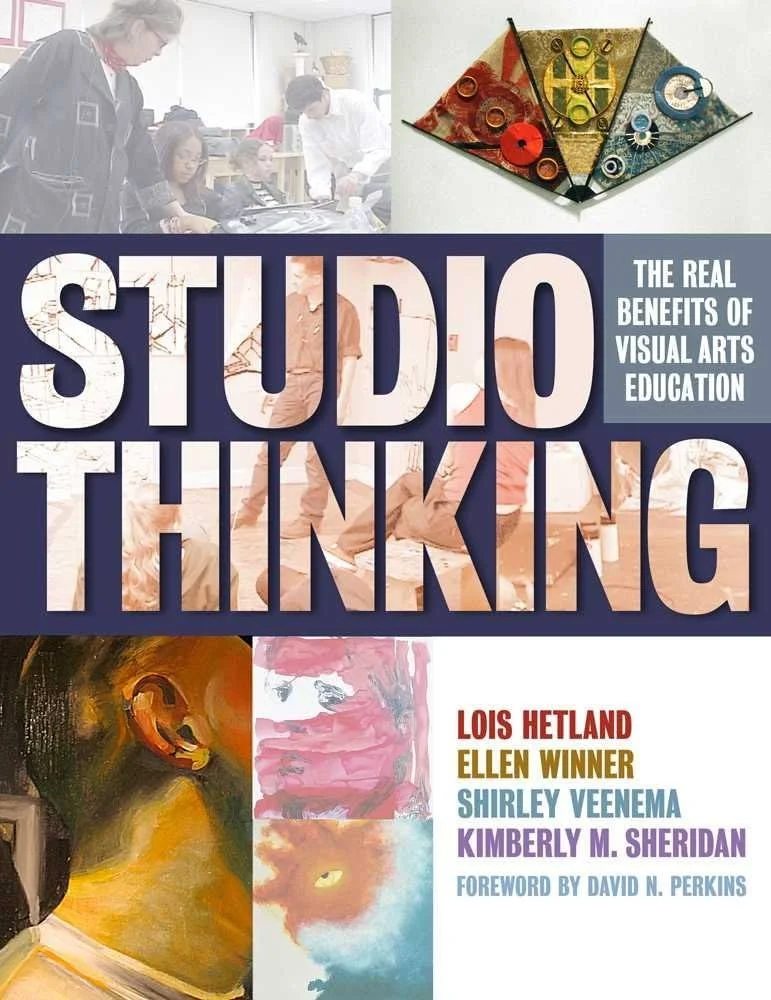
You can read an executive summary of our first edition here.
In 2007, we published our findings—in a book called Studio Thinking: The Real Benefits of Visual Arts Education. Somewhat to our surprise, the “studio habits framework” went viral, and many arts educators in the US and abroad adopted our framework. The PZ Impact Report, which I completed in 2025, documents the use of our model in various parts of the United States as well as in Singapore, Hong Kong, and India.
Studio Thinking went through a second and then third edition, and in 2018, we published an offshoot, Studio Thinking from the Start, showing how arts educators had adapted the framework for work with elementary and middle school students.
Some of my students adapted our model for other art forms. Jill Hogan conducted the same kind of study with high school band and orchestra classes, documenting the kinds of habits of mind taught in such classes. (Read a paper we co-authored on the study, linked here). And Thalia Goldstein did the same study with theater classes. A large visual arts educator movement called “Teaching for Artistic Behavior” incorporated the studio habits model into their approach (as documented in the impact report).
In my next part, Becoming a Studio Thinker, I describe how I found myself deploying all of the studio habits of mind without having intentionally trying to do so, when, in my retirement, after half a century of abstinence, I decided to pick up the paint brush again…
PART II: Becoming a Studio Thinker
© Ellen Winner 2026
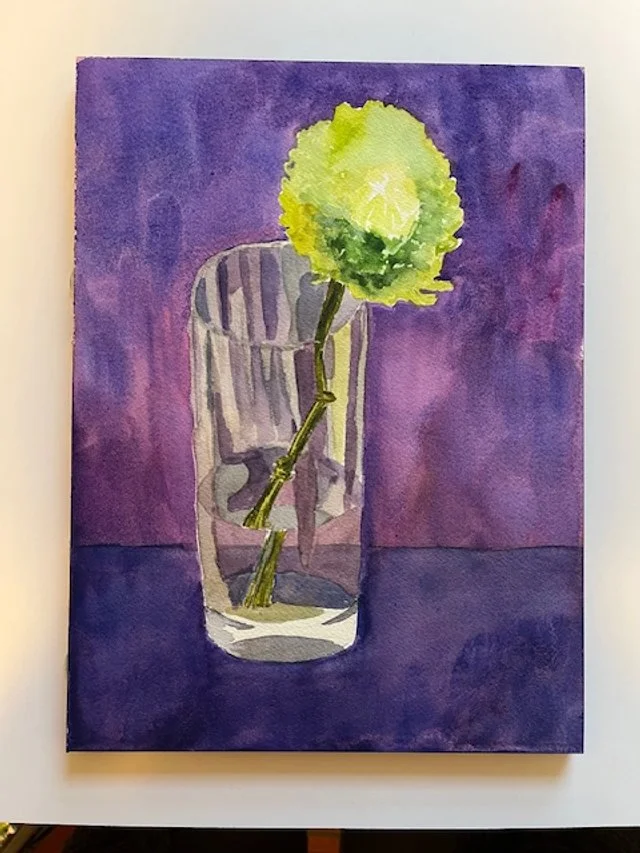
Watercolor painting by Ellen Winner, 2026
When I retired from teaching in 2021, I once again made Project Zero my chief intellectual home. I spent the first three years of my retirement researching the impact of PZ’s educational frameworks, interviewing people all over the globe. As mentioned in the previous blog, I recently completed a large (500-page, single-spaced) report on PZ’s impact. It was gratifying to see—since its founding in 1967—how far and wide the work of researchers and educators had spread. It was also gratifying to me to return to my Project Zero roots.
But what next, I wondered. Soon, an urge began to make itself felt. Voila! I would go back to my art schools roots. I would paint again! But not in oils, as I had done before. This time, I would challenge myself to work in a new medium—watercolor. I transformed my “study” into a “studio,” and for the past month, I have dived into this very challenging medium. It’s going to take me a long time (if at all) to master this way of painting.
But as I struggle with this challenging endeavor, I have come to realize that I am actually using all of the Studio Habits of Mind!
Observe: Painting an apple from observation, I have to notice the varieties of color—reds, greens, oranges, browns, yellows—and the different values of light and shade that show me that the apple is a solid sphere.
Envision: After completing one painting of an apple, I wake up the next morning thinking about the best colors for the background. Brown? Too dark. Violet? Perhaps. I am seeing the colors in my mind, deliberating.
Express: Always leaning toward expressionism in my early brief career as an artist, I want my new paintings to be expressive. Accordingly, I reach for the palette of the German expressionists. I try to recreate landscapes by artists such as Emil Nolde in deep reds, purples, greens, and blues. I eschew the pretty in favor of the moody, just as I had done earlier in oil painting.
About Art Worlds: What I just described is the propensity to connect to what has been happening in the art world—e.g. German expressionism. In addition, I read a book by Charles Le Clair on watercolor. This comprehensive work not only teaches the basic techniques but also discusses how artists throughout art history have used this medium.
Stretch and Explore: Never satisfied with the simplest tasks, I push myself to paint multiple apples as well as overlapping pears. After that, I began to paint landscapes from photographs of nature—a task much trickier than painting still lifes. And after that, I tried to master faces—very difficult, to say the least.
Engage and Persist: I wake up every morning eager to get back to my studio. I am fully engaged in this project and I keep at it, persisting hour after hour until I’m quite tired out.
Reflect: I am always thinking as I paint. Does this color look right? How can I mix it to look more subtle? How much water should I hold in my brush if I want a transparent look? Why am I so dissatisfied with this painting? Is the composition wrong or is it the colors? I am eager to show my work to others who will critique it…though hopefully, not too severely.
I realize now how much the Studio Habits of Mind are also—and perhaps fundamentally—the Artists’ Habits of Mind. All of these habits are on full display. I used to write about these habits. Now, I am using them. That is so refreshing! And so validating!
And so, I have spent a lifetime in the arts. My parents encouraged my art-making. I flirted with art school and with the idea of becoming an artist. But instead, I became a researcher in developmental psychology. But the pull of the visual arts was there, and my research turned towards understanding what children learn from instruction in the visual arts. I made myself controversial by publishing the finding that children do not learn to be stronger in academic subjects from studying the visual arts. But instead, they develop big broad habits of mind—the habits of mind of the visual artist. And finally, I was gratified to discover that these habits of mind describe well what I have been doing in my retirement.
REFERENCES
Hogan, J. & Winner, E. (2019). Habits of mind as a framework for assessment in music education. In D. J. Elliott, M., Silverman & G. McPherson (Eds.), The Oxford handbook of philosophical and qualitative assessment in music education. Oxford University Press. PDF linked here.
Goldstein, T. (2024). Why theatre education matters: understanding its cognitive, social, and emotional benefits. Teachers College Press.