Harvard Over 65–Whoops 70!–Years
© Howard Gardner 2026
It’s the beginning of my 66th year at Harvard. Before the advent of computer records, I used to quip that I had the largest cache of medical records at the university—seven volumes of written notes and medical tests.
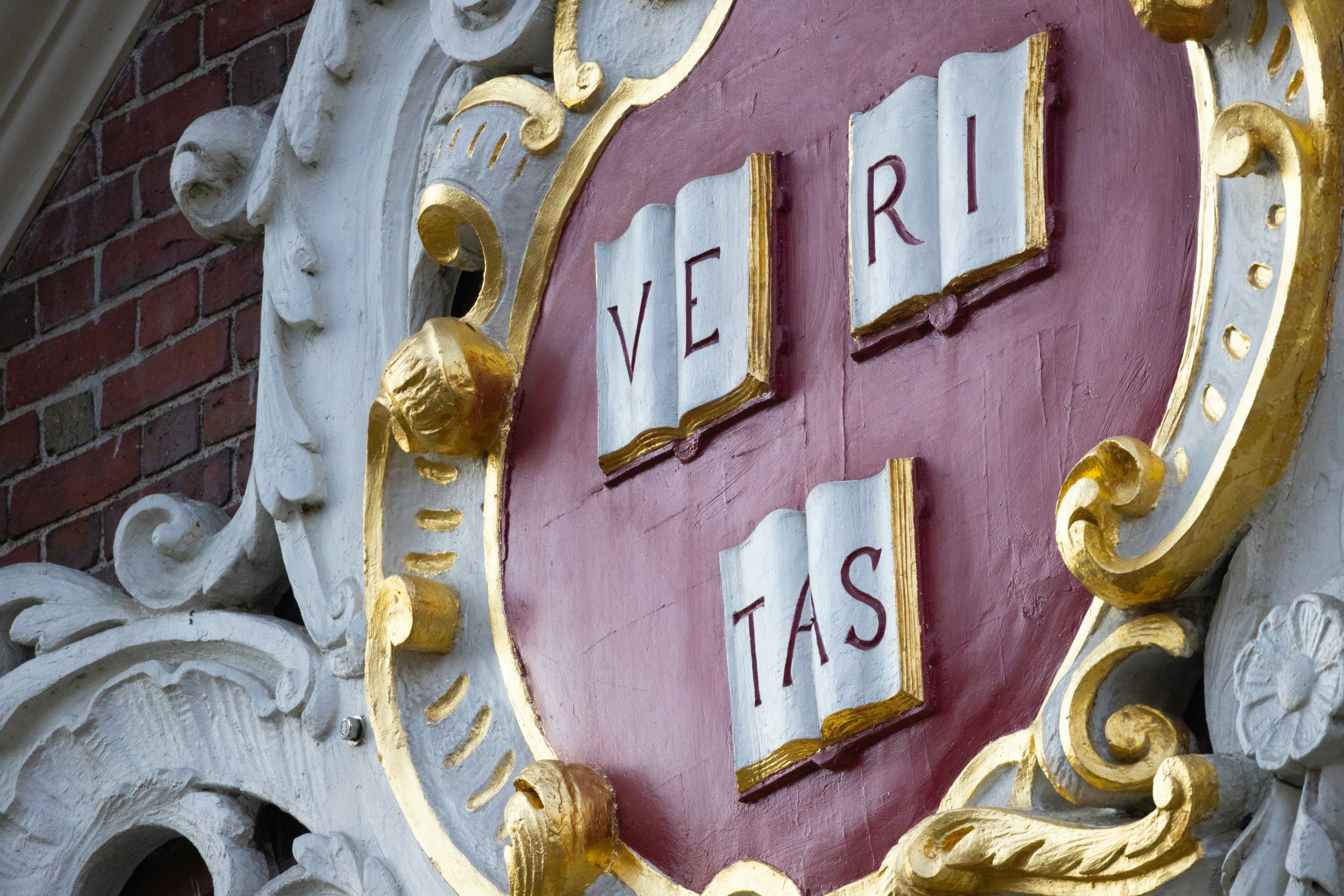
My family were immigrants from Nazi Germany—they escaped in the nick of time, arriving in New York on November 9, 1938, the night of the infamous “Broken Glass.” Comfortable economically before being forced to leave Germany and forbidden to take any money with them, my parents came from a business background and had no connection to any American institutions of higher learning.
I don’t know exactly when I first heard of Harvard. For me, as a youth growing up in the 1950s in Scranton, Pennsylvania, the colleges and universities worth knowing were the football dynamos: Notre Dame and Georgia Tech. But I remember that I was impressed when I read (in the back pages of a classic comic book) that there were four class marshals at Harvard—one Catholic, one Protestant, one Jewish, and I can’t remember what the fourth one was, but clearly “diverse.” As a Jewish boy growing up in Scranton, what we’d now term “diversity” made a deep and favorable impression on me.
It was rare for anyone from Scranton to go to Harvard, or indeed to any Ivy institution. But Mark Harris—an older boy whom I most admired and sought to emulate—had gained admission to Harvard College in 1959, and knowledge of that fact spurred me to want to go there as well. (By the way, in 1961, Harvard College charged $1500 for tuition and $1500 for room-and-board. And admission was much easier—perhaps one out of five applicants was admitted.)
In the summer of 1959, my father took me on a trip to campuses in New England, and I had an informal interview at the Harvard admissions office. Years later, because I knew the secretary to the housemaster, I inappropriately gained access to my admissions folder and scanned the notes made by the interviewer. They were matter-of-fact—but the interviewer noted that I had worn red socks and a red tie. I am colorblind and I suspect that the statement was true and that it marked me as a “hick,” which was also true! Decades later, I got in contact with that interviewer from 1959—by then, a distinguished professor at a major New England college. I asked him about the interview note. A bit embarrassed, he commented that he had stopped interviewing prospective candidates when an admissions officer had commented to him: “We don’t want too many sons of dentists from New Jersey.”
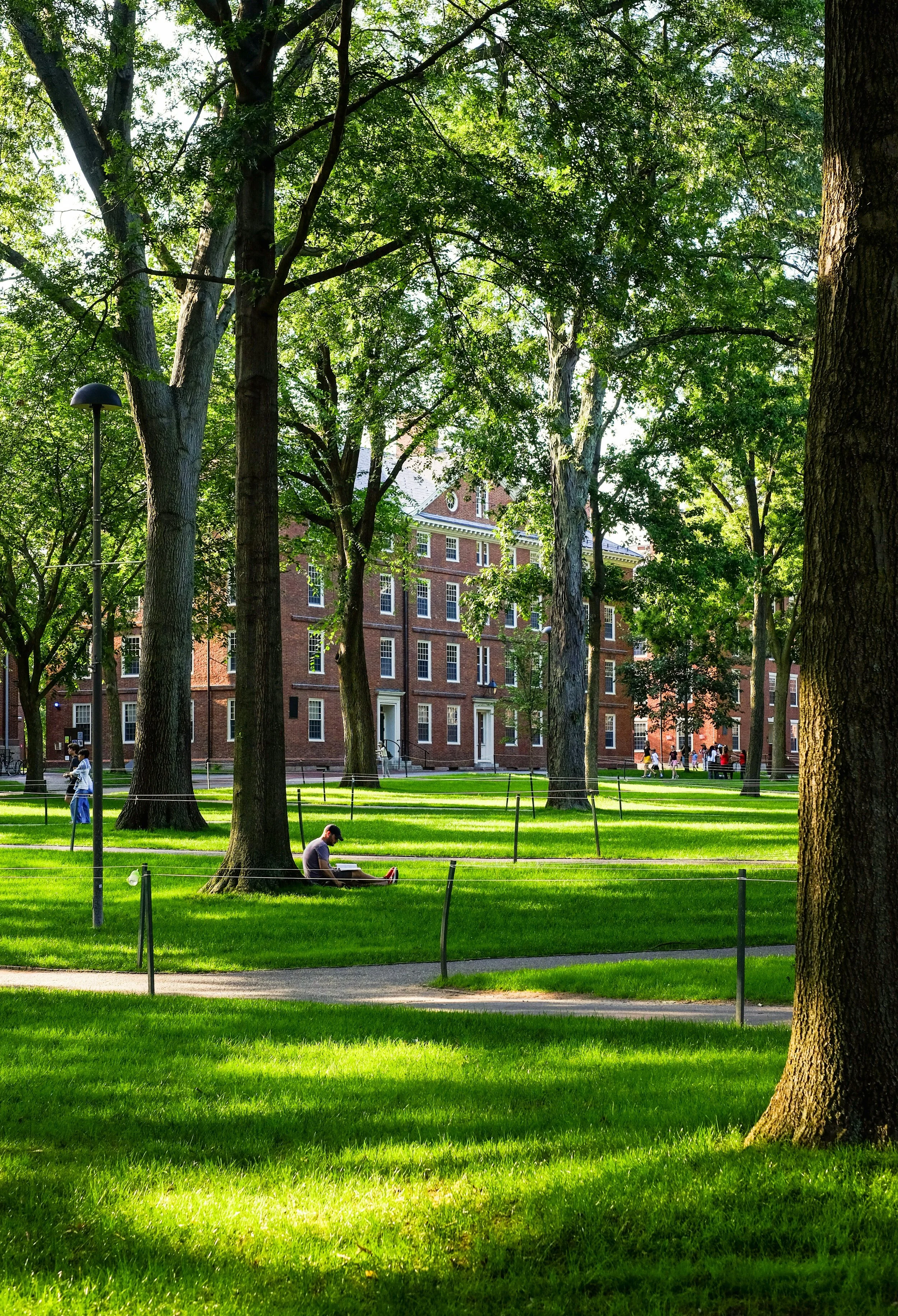
Lest you think that was an isolated remark of antisemitism, it turned out that all five of my freshman roommates were Jewish—from different cities in the Northeast—and that fact was clearly not an accident. Decades earlier, when Harvard President Abbott Lawrence Lowell imposed a quota on Jewish students, most of us would not have been admitted at all. And even around 1960, we were still seen as a group worth noticing, noting, and segregating. The difficult situation of Jewish students at Harvard in the opening decades of the 20th centuries has been documented both by historians and novelists (Kaufmann 1957; Lemann 2026).
In the same breath, I have to say that in my almost seven decades at Harvard, I have never personally felt any antisemitism. Nor has my wife Ellen (Winner, born Wiener), who has been associated with Harvard for over sixty years. (I also note that four of the last six presidents of Harvard have been Jewish—as well as innumerable deans, provosts, and other senior administrators.) I do not claim that the recent task forces reporting antisemitism as a big problem are in error—but they may well exaggerate its extent. Clearly, the recent events in the Middle East have greatly complicated the meaning and status of Judaism in America today.
I did not intend to focus on Judaism at Harvard—but any current examination must include that dimension. I should also add that a majority of the faculty with whom I became friendly as an undergraduate or graduate student were Jewish. Even when they did not signal their Jewish identity—particularly in the case of the psychoanalyst Erik Erikson but also in the case of psychologist Jerome Bruner—it eventually became known. This affiliation may have been due in part to my focus on the social sciences—Jewish professors were less common in the humanities or in the “hard” sciences.
Having decided to pursue a doctorate, I hoped that I might one day become a professor at a major college or university—and clearly Harvard would have been high on the list. As it turned out, I was able to receive salary as well as research support for twenty years (1971-1990) and so for a while, I felt little pressure to compete for a teaching job. In 1970, as I was completing my doctorate work, I did interview for a junior position in psychology at Yale. The position went eventually to my friend David Feldman—but within a few years, he had left Yale to become a professor at Tufts. I often wonder how different my life would have been had I been selected for that “junior faculty” position…thereby missing twenty years of full-time research and, possibly, an ever-deepening understanding of Harvard.
For a decade after receiving my doctorate (1971-1980), I was content to carry out research at two sites: Project Zero—a research group focused on the arts at the Harvard Graduate School of Education and The Aphasia Research Center, a neuropsychological group at the Boston Veterans Administration Hospital. But then in 1981, an amazing stroke of good fortune: I received a MacArthur Prize fellowship (sometimes nicknamed the “genius award”). This bonanza gave me five years of “no strings attached” support, even including medical insurance! Because I continued to receive salary—courtesy of research grants—from Harvard and from the Veterans Administration, I was able to stash most of the funds away for the college education of my children.

Patricia Graham, HGSE Dean 1982-1991
At the same time, the MacArthur fellowship emboldened me to speak to Patricia Graham, my dean at the Graduate School of Education. I announced, I hope gracefully, “If I don’t have a teaching position after the fellowship ends, I’ll have to look elsewhere.” I did not want to spend my declining years scrounging for salary. Through the skill of the dean, and a good deal of good luck, I was offered a tenured position at Harvard in 1986. What could have been half of a lifetime became a lifetime association with the university.
(Elsewhere I will relate the story of my path to tenure—it was not an easy path because…my case was unusual. But for now, I am postponing this tale because there’s a different motivation for this blog.)
Even given the current (and largely unwarranted) attacks by the Trump administration, Harvard remains very prestigious. I often quip: Harvard may or may not be the best university in America, but it’s definitely the best one in the world! And that’s because around the world, people know about the college or the business school or the Kennedy School—or indeed all three of them. Indeed, I think that’s a major reason why in recent years Harvard has been singled out for attack—rather than Yale or Princeton or MIT or Stanford.
But within Cambridge, 02138, Harvard is more than one place. I have an appointment at the Graduate School of Education (along with a courtesy appointment in the Department of Psychology at the Faculty of Arts and Sciences). While I know my way around Harvard very well, I was not surprised when a colleague said to me some time ago, “Oh, you are at the Ed school, I thought you were at Harvard!” (by which he clearly meant the Faculty of Arts and Sciences and The College). And indeed, there is a definite prestige hierarchy—FAS constitutes the apogee, and the professional schools are also ranked, with the education school and the divinity school less prestigious than the law school, the medical school, or the business school; with architecture or public health somewhere in the middle.
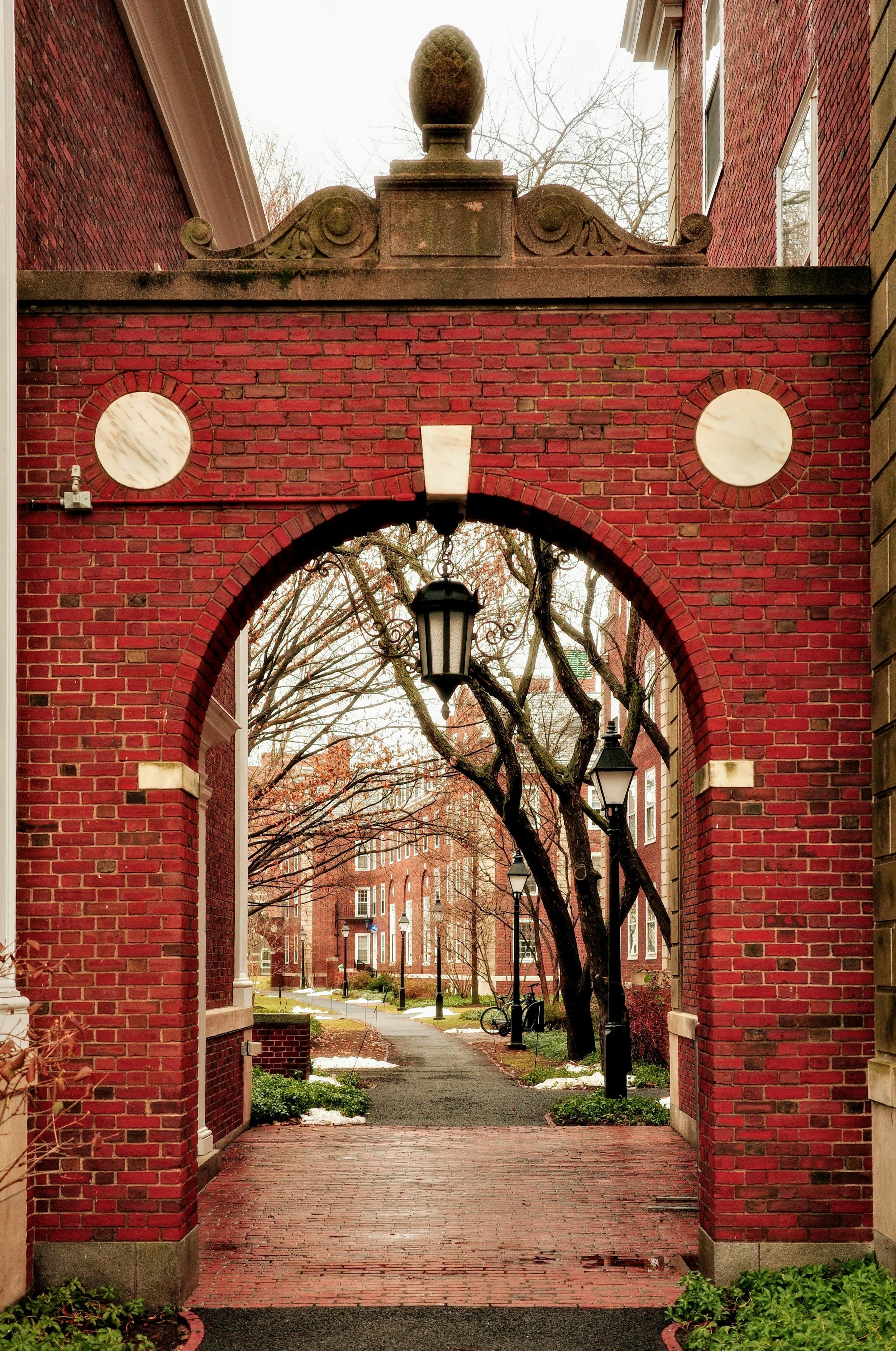
I should say that this difference in prestige has never bothered me. I am fortunate to have colleagues and friends across the university and—as with my religion—I’ve never felt at a disadvantage because of my primary affiliation. But I do regret that many members of specific faculties have little connection to scholars in other faculties, even when their interests are quite similar!
At any rate, to those who live beyond 02138, I am simply a Harvard professor. My aunt Edith used to tease me, “You can always tell a Harvard man…but you can’t tell him much.” (In those days, nearly all Harvard professors were men. I don’t recall any female professors when I was in college, and indeed, only one female section leader.)
There’s much more to be said about Harvard (which will celebrate its 400th anniversary in less than a decade)—and about my life at Harvard—and if I have world enough and time, I hope to venture beyond the blogosphere. (For some thoughts, see Gardner 2020.)
But for now, in closing, let me relate two other clichés that I heard when I was younger:
Harvard is filled with professors; each of whom thinks he is smartest person in the world.
Harvard is filled with professors; each of whom thinks that today is the day that he will be found out (i.e. revealed to be a fraud).
I suspect that more than a few of us do oscillate between these sentiments—though how we deal with them is a question for clinical psychology, not cognitive or developmental or neuropsychology. And perhaps these clichés are not just restricted to professors, as I think of those who are in charge of our various institutions, including the national government…
ACKNOWLEDGMENTS
I thank Kirsten McHugh, Annie Stachura, and Ellen Winner for their thoughtful comments on earlier drafts.
REFERENCES
Gardner, H. (2020). A synthesizing mind. MIT Press.
Kaufmann, M. (1957). Remember me to God. J.B. Lippincott & Co.
Lemann, N. (2026). Returning. Liveright.
