From Documentary to Caricature
© Howard Gardner 2026
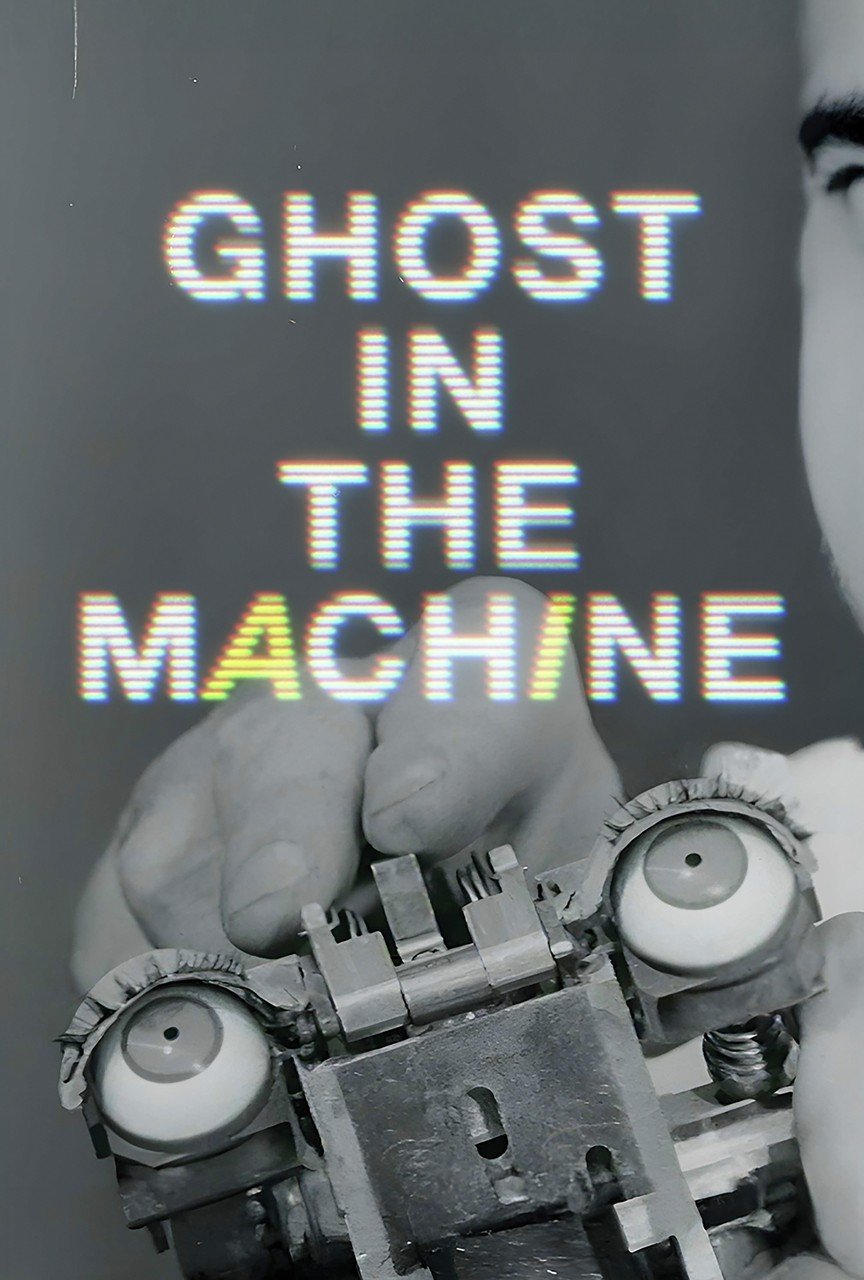
It seemed like just the presentation that many people would be interested in and that I would enjoy and learn from—Valerie Veatch’s documentary The Ghost in the Machine. Its sweep: recalling the beginnings of the study of intelligence in the latter part of the 19th century and culminating in a consideration of various forms of intelligence, particularly artificial intelligence (AI) in the second quarter of the 21st century.
The documentary is currently being shown on PBS. Accordingly, it has the imprimatur of a most respected network—one valued by many discriminating viewers in many locales.
Veatch’s film covers many of the most important landmarks: the proposal by British scholars of the notion of a single intelligence in the latter part of the 19th century; the development of intelligence testing (particularly in France, Britain, and the United States) in the early part of the 20th century; the spread of standardized testing over the last century; the coining of the term “artificial intelligence” in the middle of the 20th century; the development of many “smart machines” in recent decades, culminating in the emergence of highly competent computational systems, dubbed AI (artificial intelligence) or AGI (artificial general intelligence).
So far, so good. As a psychologist, I knew about the history of the concept of intelligence; the emergence of IQ testing; and the importance attributed to the concept of intelligence by many researchers and practitioners in that field. And as the first historian of the field of cognitive science, I had chronicled the early versions of AI—the crucial Dartmouth conference in 1956 (where the phrase “artificial intelligence” was first discussed); the discovery of the importance of neural nets in the mid-1980s; controversies about various views of intelligence in several disciplines. And as a researcher, I am well acquainted with pluralistic notions of intelligence—put forth by Robert Sternberg (Triarchic Theory), Daniel Goleman (Emotional Intelligence) and my own Theory of Multiple Intelligences.
However: once the program proceeded, it gradually dawned on me that it was putting forth a point of view that is partisan, misleading, sometimes wrong, and even dangerous. To put it bluntly: The documentarian embraces the position that any and all investigations of intelligence are inherently racist, sexist, and based on genetics. Both the personalities portrayed (e.g., Francis Galton, Charles Spearman, Hans Eysenck, John McCarthy, William Shockley, James Watson) and the particular words cited from them state or imply that intelligence is a genetic and racially-loaded characterization. If, as a naïve viewer, you only knew of this documentary, you would not realize that the field of intelligence has been studied by numerous scholars of many backgrounds, that there are many active controversies (e.g. the validity of measurements, the types of intelligence, the appropriateness and limitations of different models; and that unilineal and unilateral approach is prejudicial rather than comprehensive, let alone authoritative.)

Valerie Veatch, Ghost in the Machine’s director
Indeed, there is nary a mention of the numerous respected scholars who challenge the notions or measurement of a single view of intelligence; or the many historical, cultural, and psychological reasons that might account for different performances on standard measures; or the numerous cultural and historical reasons for performances on short-answer Western-skewed measures. Moreover, nearly all those individuals featured as part of the history are white males, most of the critics of the genetic view of intelligence are either women or males who are clearly non-white; and the comments that have been presented lack any kind of nuance.
The bias of this documentary is conveyed definitively by the listing of just one funder of research on intelligence—the right-leaning Pioneer Fund. In fact, the study of intelligence and intellectual faculties has been underwritten by dozens of public and private philanthropies—who span the entire political and economic spectrum, at least a dozen of whom have funded my own research on multiple forms of intelligence, stretching over 45 years.
It is hard to watch the video without coming to the conclusion that all who have studied intelligence are Western white males reading from the same book and that the vast preponderance criticizing it belong to other demographies.
Clearly, the “ghost in the machine”—actually a clever figure of speech proposed by the British philosopher Gilbert Ryle—is designed to undermine any serious examination of the nature and provenance of human intellect; any consideration of different views of the nature and source of human intellectual capacities; any accounts of research that is based on genuine curiosity (rather than prejudgment); any attempt to explore the positive uses of AI or AGI. Indeed, many a viewer will end up concluding that the field of intelligence was started by British racists in the latter half of the 19th centuries and is now culminating in President Trump’s unnuanced embracement of AI—particularly, the Silicon Valley strand.

Clearly, the makers and funders of this documentary missed an opportunity. The study of intelligence and intelligences—from the middle of the 19th century until the second quarter of the 21st century—is a fascinating topic—with many important delusions, discoveries, and debates. Plenty to critique, but much to celebrate, and many promising avenues to explore. (As a personal example, please see my co-authored blog “Who Owns Intelligence,” now expanded on in an updated version of Frames of Mind and forthcoming in an updated version of Multiple Intelligences: New Horizons.
Putting on my cap as a student of media, I sought to discover who conceived and funded this program, why and how it was acquired PBS, and whether there were any efforts to critique it.
And because I failed, I am posting this blog.
References
Gardner, H. (1983; 2026). Frames of mind. New York: Basic Books.
Gardner, H. (1993). Multiple intelligences: New horizons. New York: Basic Books.
Goleman, D. (1995). Emotional intelligence: Why it can matter more than IQ. New York: Bantam Books.
Sternberg, R. (1985). Beyond IQ. New York: Cambridge University Press.
