Building a Curriculum on Genes
© Howard Gardner 2026

I’ve casually asserted that one could build an entire curriculum around Finding Your Roots—the title and theme of Henry Louis Gates’ well-received series on PBS. Gates interviews luminaries from various fields and, conversing with them and examining their genetic heritage, discovers surprising information about their families, often dating back centuries.
Let’s say that around age 10, when most students have mastered the basics of reading, writing, calculation, and (perhaps) coding, children were introduced to information about their own heritage. Or—if that proved too delicate or too risky—information about the genetic heritage of someone in whom they have a lot of interest: a relative, a neighbor, a citizen in their community, a celebrity, a hero, a villain…you can name it.
Enter the span of the curriculum.
To begin with, you can’t understand anything about genes unless you learn some basic biology. And that’s not just the specialty called genetics; it includes knowledge about the species, the nuclear family as well as far-flung relatives. (Anthropology used to focus primarily on kinship, since that was the preferred “entry point” for dealing with various “indigenous” populations around the world.) And of course, once one learns about kinship, one also learns about various groups in one’s community—sociology, as well as the study of society and social groups, from ants to royalty—the interests of polymath Mark Moffett.
But your family did not just appear at a single moment in time! It dates back hundreds, indeed thousands of years—in all probability to Africa, and then spread out to Europe, or Asia, or Polynesia, and—by one or another route—to the Americas. Obviously, tracing these treks—as Paul Salopek has done in Out of Eden—involves geography, and equally, it involves history. What happened around the world over the course of time, what were the factors—geographical, military, political—that made up the facts and the forces of one’s own family over time; and indeed, of other families, ranging from neighbors and friends, to media heroes, to political figures—from Taylor Swift to Donald Trump, from Elon Musk to Oprah Winfrey (to mention celebrities that I’ve heard of 😊).
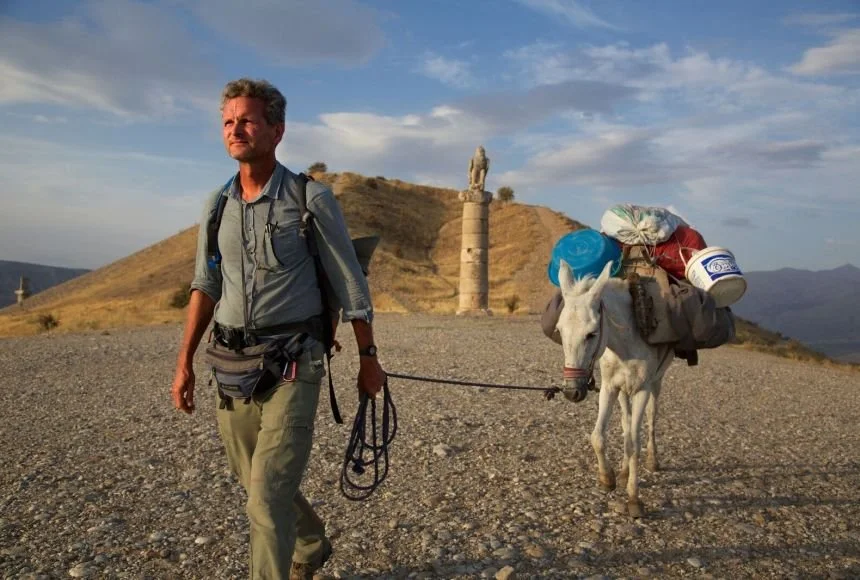
Paul Salopek in eastern Turkey during his Out of Eden walk
In the second quarter of the 21st century, one no longer needs to master foreign languages, unless one wants to. (In my own case, I learned German from my parents and grandparents, Yiddish from my first wife’s family, Latin from Mr. Roberts in high school, and enough French in college that I could read short stories, as well as menus.) Nowadays, there are numerous e-devices and approaches to aid you in learning languages and, if you are interested, in learning about the science of linguistics—whether from William Jones (who discovered the basics of Indo-European languages) or from Noam Chomsky (who sought the bases of syntax).
What of psychology, my own field of study? I hardly have to make the case. Indeed, if anything, the world suffers from too much pop-psychology and too many efforts to explain all human behavior and pathology through psychology. Getting the psychology right is the challenge! Cognitive science (which spans the disciplinary terrain from linguistics to computer science to anthropology) is a scholarly effort to explain how living entities do what they do in the ways that they do it and what the consequences might be. Social and clinical psychology seek to explain our motivations and, as desired or warranted, how our motivational spectrum might be altered.
What does it cost to secure such information? How does one construct a family tree, carry out genetics tests, explain the movements of individuals and populations from one place to another, rendering some families and nations wealthy, and others indigent? What options and consequences might lie ahead? Enter economics.
Last, but by no means least, the arts. How do we capture experiences, convey them to others, learn about how others have seen, heard, felt, expressed themselves in the past, and contemporaneously? Often, and very often best, through one or more of the arts. And while many arts and art forms deal with the realities of human experience, they also capture the fruits and figments of imagination—how might our lives have been different? What medium is most capable of capturing what’s salient in your own family, your own history—and how best to glean such information about others?
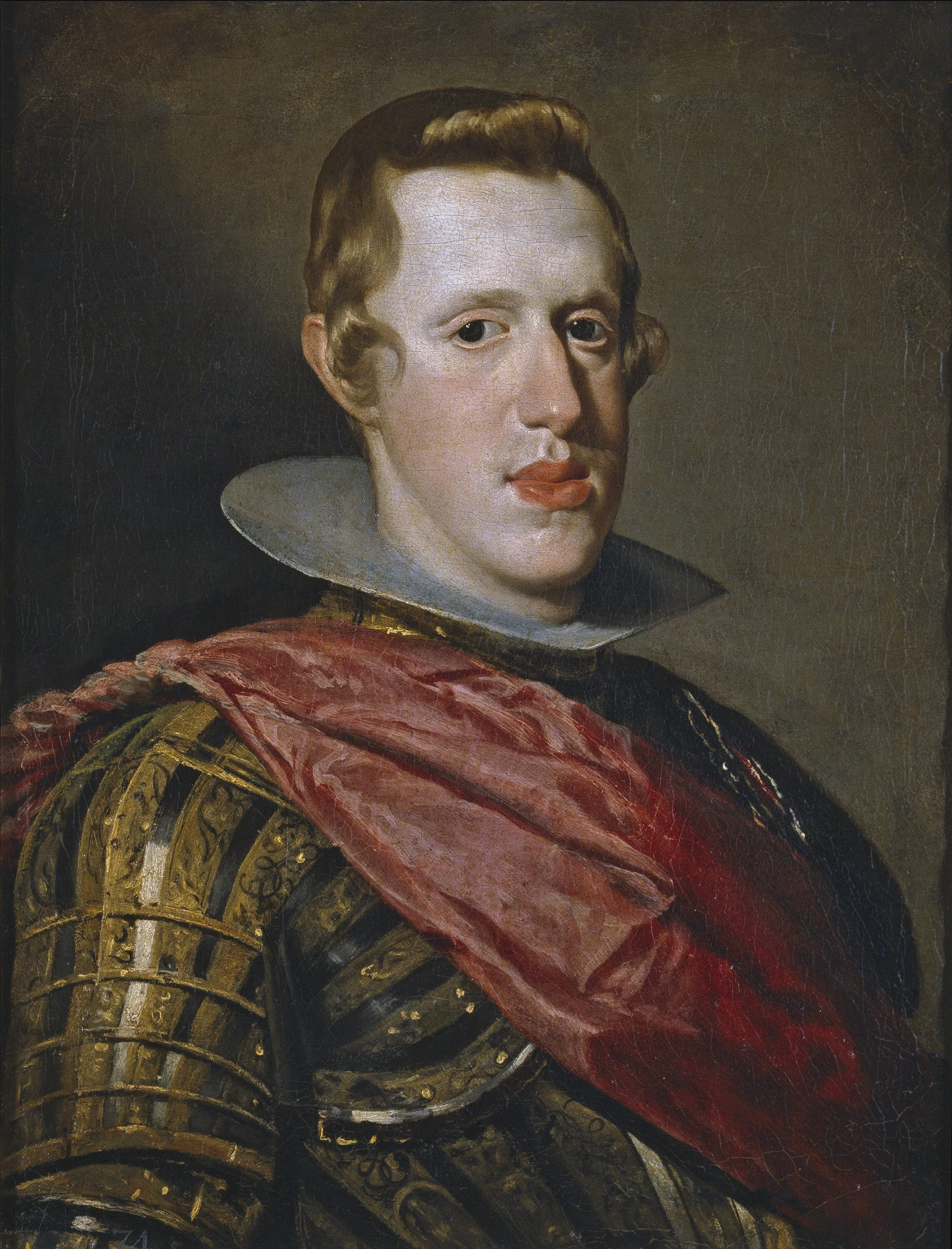
Portrait of Philip IV in Armour portrait by Velázquez
Or, venturing beyond your own expressive aspirations and preferred medium, what other scenarios can be imagined and conveyed? Whether one ever knew Captain Ahab, Huck Finn, or Ophelia; whether one learned about Philip IV from history, from legend, or from Velázquez’s painting; whether it is true that (as Napoleon quipped) The Marriage of Figaro actually triggered the French Revolution—there is no substitute for immersion in the arts. The aforementioned individuals reflect the genes of their creators and perhaps, if you’ll permit a leap, the hypothesized genes of the characters they created.
To be sure: Genetics is closer to some fields (biology) than to others (music, philosophy). At times, the genes of your family may be a less helpful or promising entry point than some other possible candidates (food, the weather, humor, one’s health). But the principle—that beginning with any intriguing topic, one can survey a range of scholarly disciplines—seems plausible.
Overview
I’ve sought to demonstrate that, from an intriguing “entry point,” one can traverse the range of scholarly disciplines. My particular choice was “family genetics”—but of course other promising entry points would work as well. I’ve also picked an age group—ten-year-olds—but some aspects could be launched earlier, while other facets might be easier or more appropriate to introduce at a later age. And to be sure, I am not plugging an array of introductory courses. Rather, I am suggesting that the fundamental questions that underlie any discipline are appropriate for any person who has attained basic literacy. Any learner should have the option of going deeper, or wider, in that discipline.
So here’s my claim:
What has long been a possibility (for example, in progressive education of the John Dewey and Jerome Bruner variety) becomes far easier now that “AI” has genuinely arrived. To be sure, AI is not a magic wand—there are plenty of examples of AI applications that are unreliable, or misleading, or even perilous.

But I feel reasonably confident in the following assertion: If the billions of dollars currently spent on textbooks and standardized curricula would be applied instead to the creation of AI applications that are reliable; that sustain interest and curiosity; and that can smooth the progress from novice to apprentice across the disciplinary terrain—we would have a population that is far better educated than most populations are today, and a population that would be motivated to continue their education well beyond the days when their attendance at school is required and when they are subjected to a required standardized curriculum developed many decades ago, foisted on countless youngsters, and often leaving little evidence of its success.
Acknowledgments
For their helpful comments on an earlier draft, I thank Kirsten McHugh, Annie Stachura, and Ellen Winner.
References
Bruner, J.S. (1960). The process of education. Harvard University Press.
Dewey, J. (1916). Democracy and education: An introduction to the philosophy of education. Macmillan Publishing.
Gates, H. L., Jr. (Host). (2012–present). Finding Your Roots with Henry Louis Gates, Jr.[Television series]. PBS.
Moffett, M. (2019). The human swarm: How our societies arise, thrive, and fall. Basic Books.
Salopek, P. (2013–present). Out of Eden Walk, National Geographic Society. https://outofedenwalk.nationalgeographic.org/
