A Gift that has Continued to Give
© Howard Gardner 2026
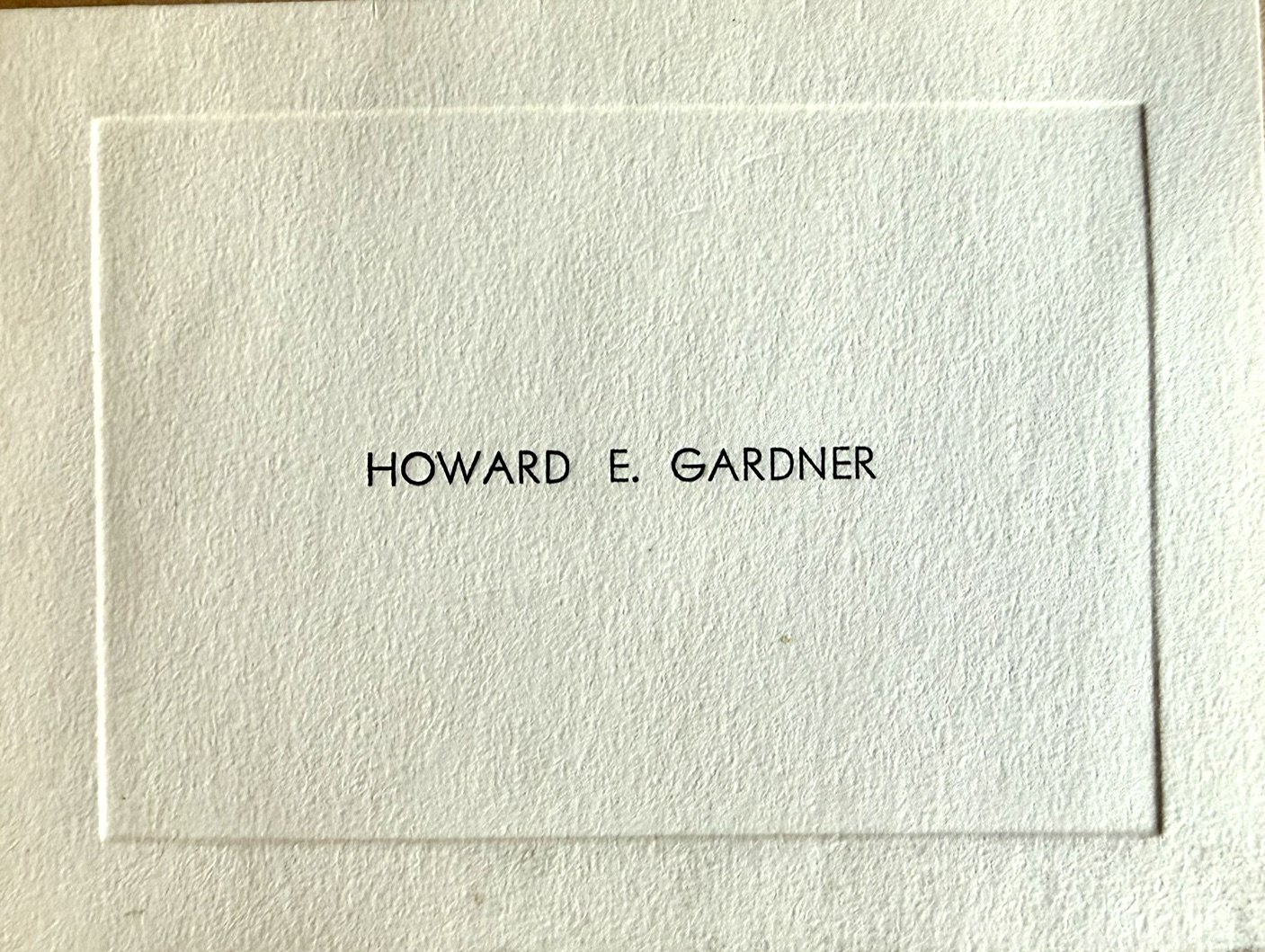
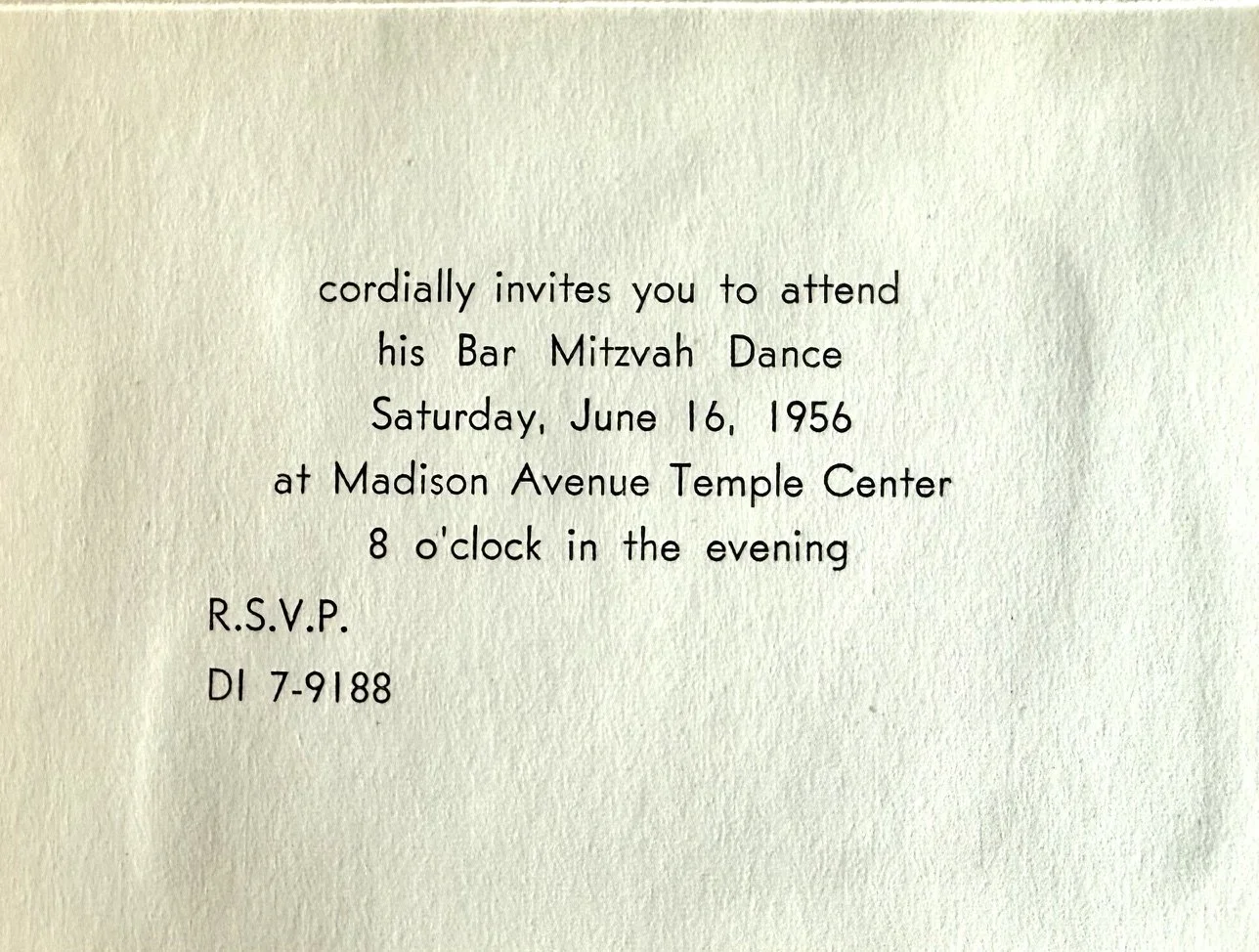
In the summer of 1956, I turned 13. As a Jewish male, it was the time of my “bar mitzvah”—when, according to Jewish lore dating back many centuries, I (the boy) became a man. My family and I were not particularly religious, but I went through the rituals comfortably at our Reform synagogue in Scranton, Pennsylvania.
For whatever reasons (and I’ve speculated about various neurological or psychiatric reasons), my memory for the events of my childhood is very meager. I am certain that there were photographs and films of the celebration, but those have long been lost. That said, I do remember three things:
Along with my parents and sister, my three surviving grandparents attended. I took a memorable walk around the neighborhood with my grandfather (who was then about 80) and—using his cane on the sidewalk—he portrayed how he had led a cavalry division in World War I. Having been a proud and apparently effective German soldier, he could never have imagined that thirty years later, he and all other Jews would be targeted for abuse and, eventually, murder. (How most of our family escaped in time from Nazi Germany is a very long and complex tale—see Gardner, 2020.)
Because my parents were less cognizant of the norms of teenage celebration, I handled many of the logistics for the post-ceremonial party for my peers. This included arranging for a band to play music, approving of the tunes that were played, making sure that ample food was available for the attendees, and collecting any gifts.
Ultimately, I compiled a list of all the gifts that I received at the time and estimated the cost of each of them! I remember receiving 156 gifts—and I wrote a personal thank you note to each of the donors.
But in drafting this blog, I’m not motivated to take a trip down memory lane. Indeed, as already admitted, my remembrance for things past is very meager. Rather, I want to pay tribute to my aunt Olga, who gave me the best gift—one that I’ve valued for seven decades!
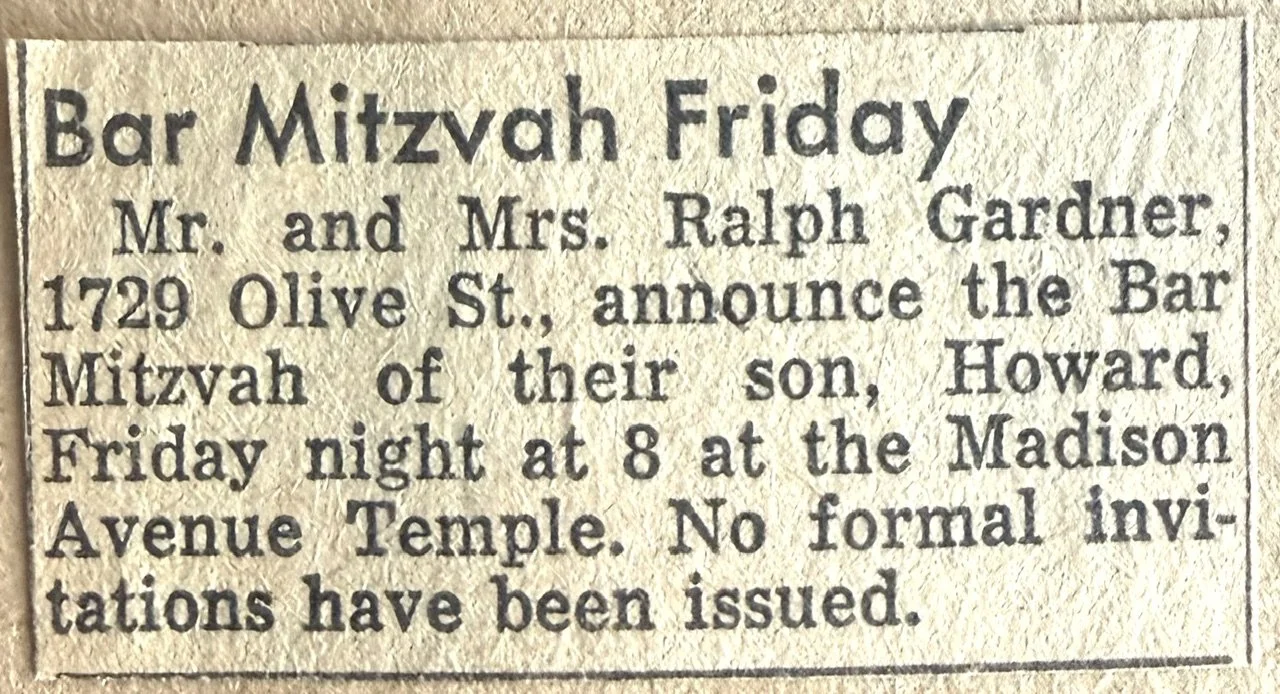
Newspaper announcement of Howard’s bar mitzvah
At the time of my bar mitzvah, I was recognized as a gifted pianist—only one other young Scrantonian was as talented—but I had already determined that I did not want to continue taking formal music lessons. Having learned what I could from Scranton-based teachers, I would have had to take a three-hour bus ride back and forth to New York every week and practice at least three hours a day. Neither of these pursuits appealed to me. And so, from then on, I played the piano chiefly for fun and also gave lessons sporadically to kids in the neighborhood.
All over the Western world, students of classical piano begin with pieces by Bach and by Mozart—two composers that I have cherished for over 70 years. I have played some of their work for decades and gone through a few editions of Bach partitas and Mozart sonatas.
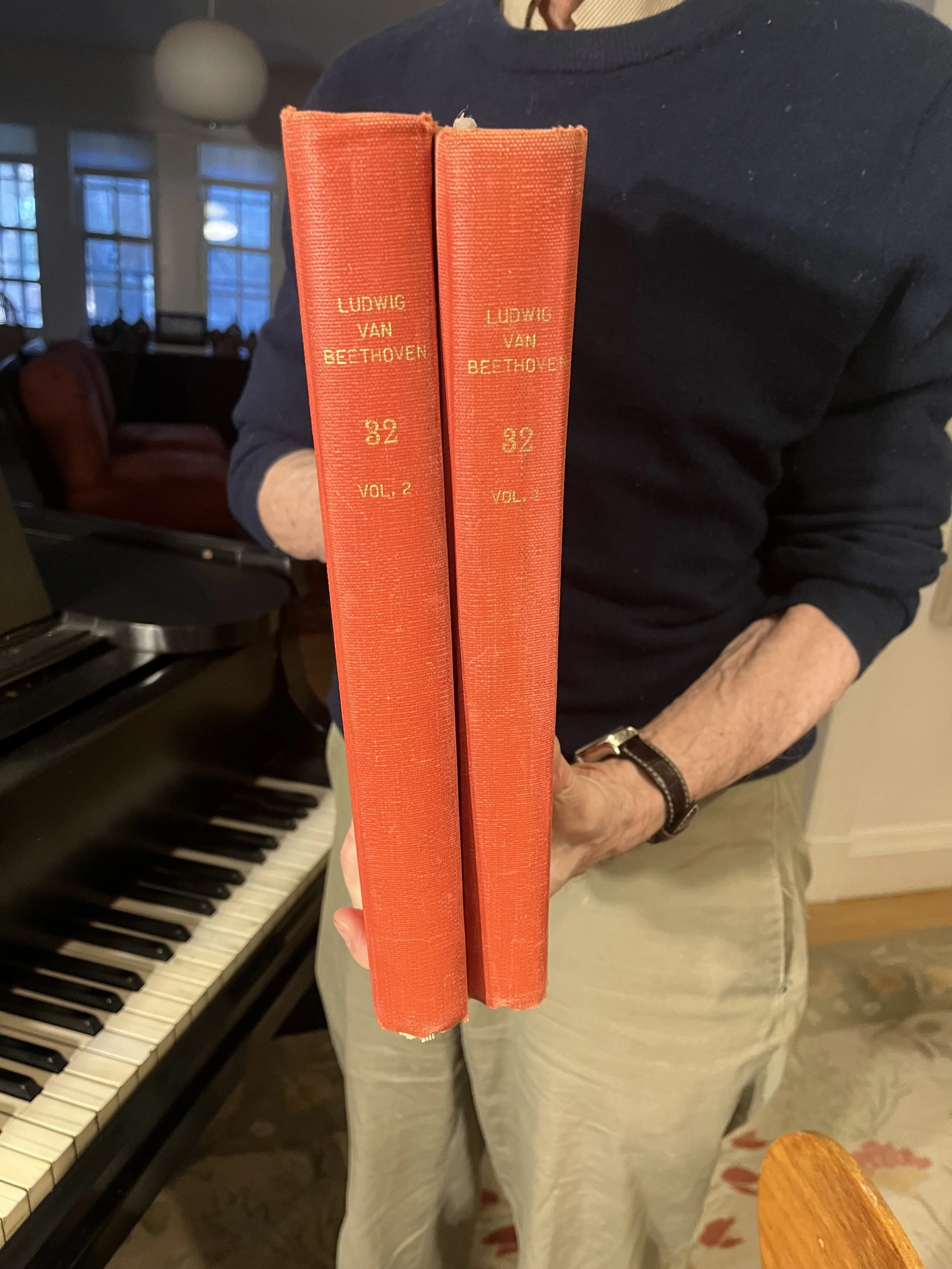
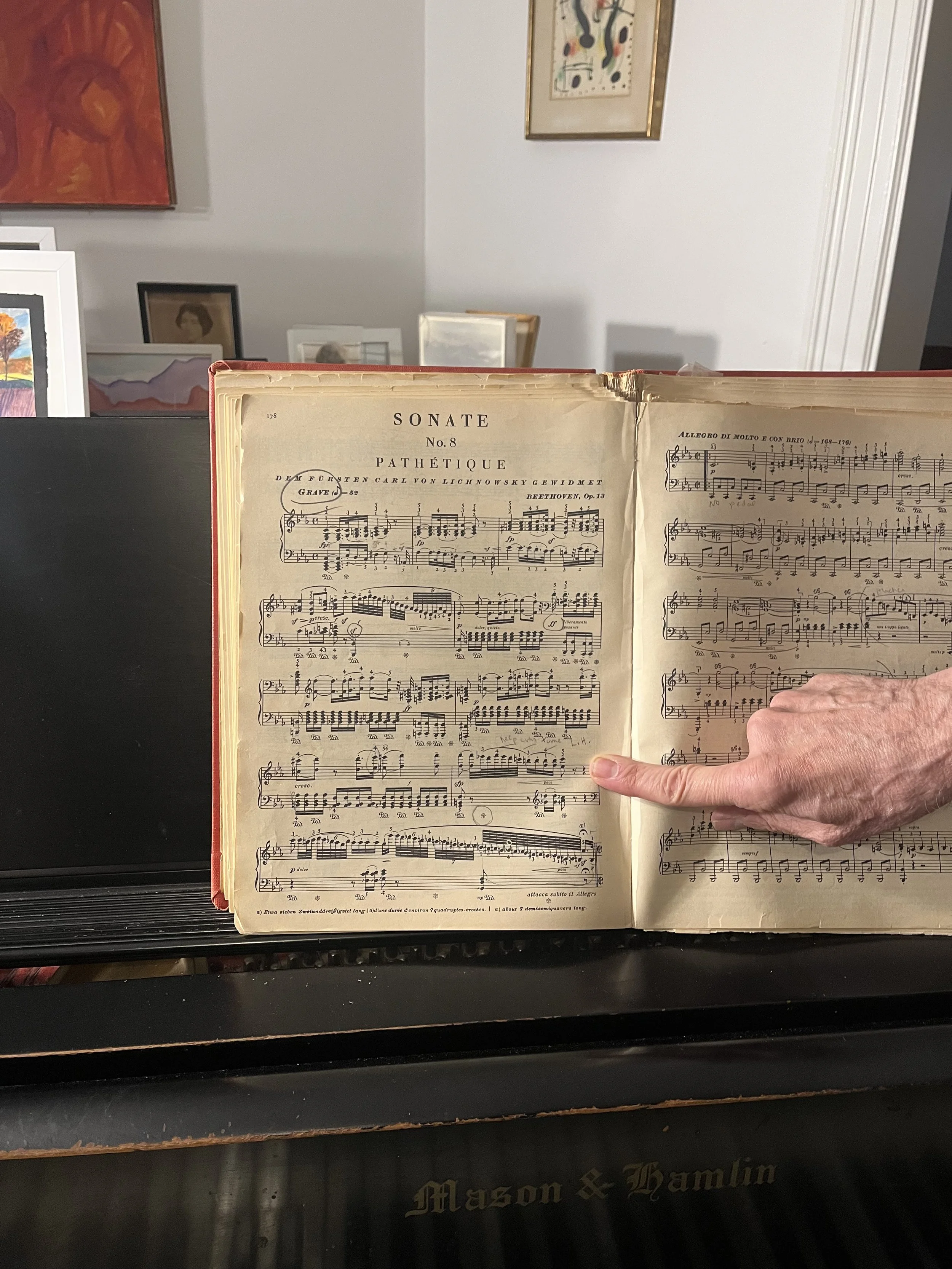
But for most young classical pianists, the major challenge entails the 32 sonatas written over a few decades by Ludwig van Beethoven. And it was Aunt Olga’s inspired decision to give me bound copies—two volumes in red casing—of these sonatas. The sonatas were edited by Artur Schnabel, considered the reigning expert on what Beethoven intended, especially when marks in the original manuscripts (dating back over two centuries) were ambiguous.
As life intervened—high school, college, graduate school, a life as a researcher, professor, husband, parent, and family member—I did not have much time to play the piano. But whenever I found time, I would return to composers and pieces that I most cherished—and consulted the scores that were at hand.
Now that I have retired from teaching, I try to play the piano each day. At my age, I don’t get better—indeed, I get worse—and so I don’t perform for others, even when asked to do so. But each year, I make an effort to play the standard classics—the composers that I’ve mentioned—and that includes many of the Beethoven sonatas.
The motivation for this blog: While I generally use sheet music, I make it a point to use the bound volumes given to me by Aunt Olga. Not only do I remember her with genuine fondness, but perhaps more so than any other possession of mine, these Beethoven sonatas connect me to my own childhood, my own past, my own passions.
One more point: My parents and grandparents did not have higher education—few individuals (particularly few who were Jewish) went to university a century ago. But my mother, my grandmother, and Aunt Olga had all studied piano and encouraged their children to do so as well. And I have a fond memory of my own maternal grandmother—roughly the age of Aunt Olga—showing me that she could still play the first lines of a Schubert Impromptu (Opus 90, #4). I’ve tried to share my passion for classical music with my own children and grandchildren, and some of them have indeed taken up the piano or other instruments. And even as AI is poised to take over so many facets of our lives, I hope there will be a place for individuals to practice a favored vein of artistry (the majority of my own family favor the visual arts)—and in turn to pass on their passions to generations to come.
ACKNOWLEDGMENTS
For providing the images of my bar mitzvah invitation and announcement, I thank my cousin John Gardner.
REFERENCES
Gardner, H. (2020). A synthesizing mind. MIT Press.
