Part 2 of 3: Rethinking the Five Minds for the Future in the Age of AI and AGI—From Intelligent Learners to Wise Human Agents
© Kinjal Chakraborty 2026

There are some ideas in education that do not become obsolete with time; instead, changing times reveal new dimensions within them. Howard Gardner’s Five Minds for the Future is one such idea. His disciplined mind, synthesizing mind, creating mind, respectful mind, and ethical mind offered a powerful way of thinking about the capacities human beings would need in an uncertain future (Gardner, 2006). Today, however, that future looks very different. Artificial intelligence can write, translate, analyse, code, generate images, compose music and participate in increasingly complex intellectual tasks. The possibility of artificial general intelligence (AGI) makes the question even more profound. If machines eventually become capable of performing a broad range of cognitive tasks, what should education cultivate in human beings?
This question has made me return to Gardner’s Five Minds—not to replace them, but to rethink the relationships among them. When Howard Gardner introduced Five Minds for the Future, he offered education a remarkably enduring question: what kinds of minds will human beings need in order to live, work, and contribute meaningfully in an uncertain future? Gardner identified five: the Disciplined Mind, the Synthesizing Mind, the Creating Mind, the Respectful Mind, and the Ethical Mind. He argued that these capacities should be cultivated and integrated rather than treated as isolated educational objectives.
Two decades later, Gardner himself has returned to this framework and called for a renewed reconsideration of the Five Minds, particularly in light of artificial intelligence and the prospect of increasingly general forms of machine intelligence.
This moment invites an important educational thought experiment: What happens to the Five Minds when intelligence is no longer exclusively human?
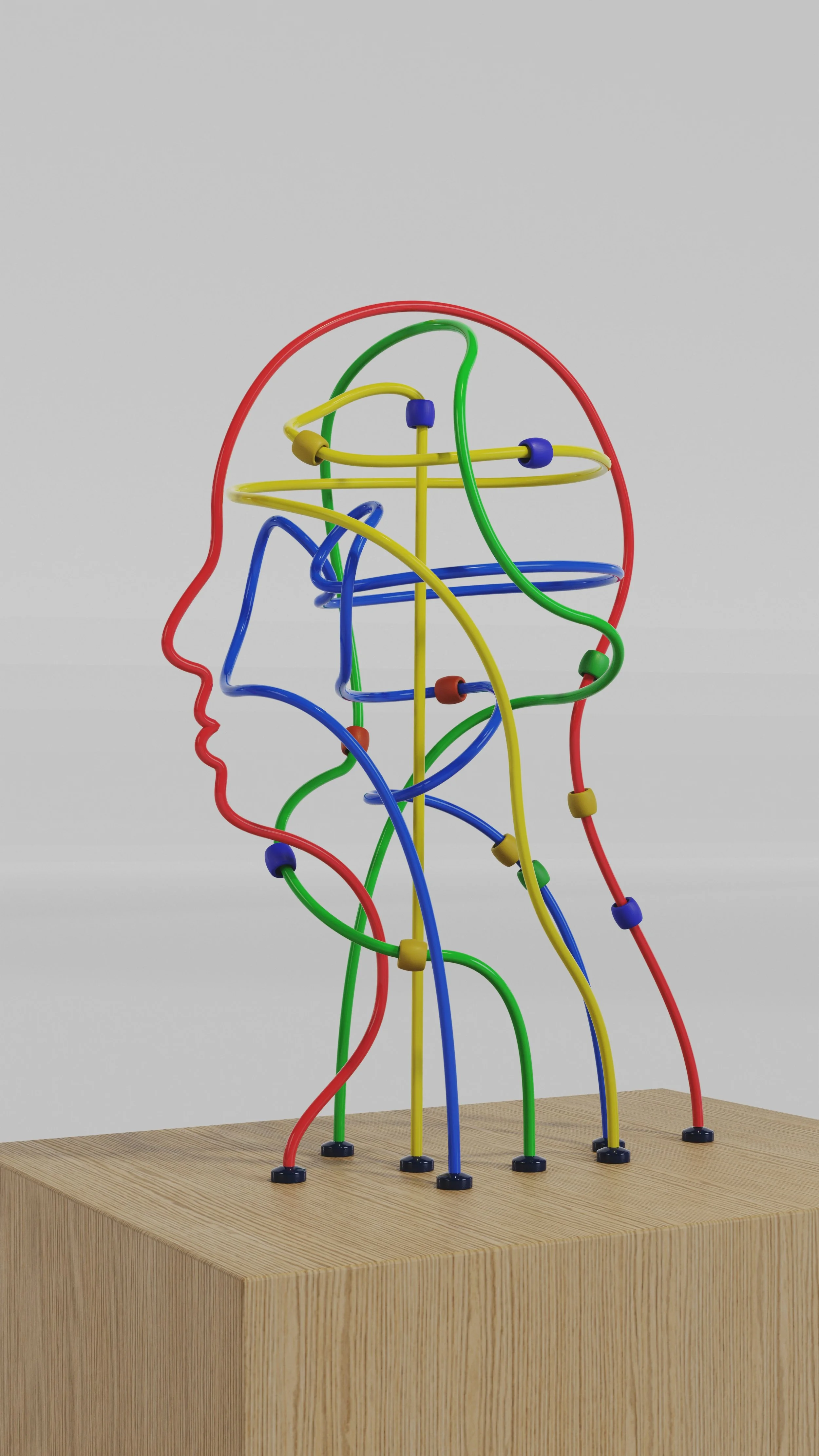
The emergence of generative AI has already changed the relationship between knowledge, learning, and technology. AI systems can retrieve and organize information, generate explanations, summarize complex material, produce images and music, write code, formulate arguments, and assist with creative and intellectual tasks. UNESCO consequently argues that education must develop AI competencies while protecting human agency, dignity, inclusion, equity, and ethical responsibility.
The challenge, therefore, is not simply to add AI literacy to the curriculum. We need to rethink what it means to be an educated human being when artificial systems increasingly participate in cognition. My engagement with Howard Gardner’s Five Minds for the Future has been more than an academic reading; it has been a personal journey into my own understanding of what it means to be educated.
When I first encountered the disciplined, synthesizing, creating, respectful and ethical minds, I saw them as five capacities education should cultivate. But with repeated reading, I began to see them differently—not as separate minds, but as five voices within the same human being. We can smell the idea of Polyphonic Pedagogy in the context of the manifestation of the possibility.
The disciplined mind taught me the value of depth; the synthesizing mind, the power of connection; the creating mind, the courage to imagine; the respectful mind, the beauty of human encounter; and the ethical mind, the responsibility that must accompany knowledge.
My recent return to Gardner’s ideas in the age of AI has made them even more meaningful. Machines can increasingly provide information, synthesise ideas and generate creative possibilities. But they cannot simply replace human judgment, empathy, responsibility and the search for meaning.
This has led me to a deeply personal insight: intelligence is not the same as wisdom. I now see the Five Minds as an evolving ecosystem. AI may help us know, connect and create, but we must still decide what is meaningful, what is valuable and what is right. Perhaps this is why I keep returning to Gardner’s work. Each reading leaves me with a new question. The latest one is the most profound: If machines are becoming increasingly intelligent, how can education help human beings become increasingly wise?
For me, that question is the enduring gift of Five Minds for the Future.
The Disciplined Mind: From Knowing More to Knowing Deeply
The Disciplined Mind traditionally refers to mastery of important bodies of knowledge and the ways of thinking characteristic of particular disciplines.
At first glance, AI seems to weaken the necessity of disciplinary knowledge. Why should a learner memorize information when an AI system can retrieve it instantly?But this question mistakes information for understanding. The more powerful AI becomes, the more important disciplinary understanding may become. A learner who does not understand mathematics cannot reliably evaluate an AI-generated mathematical argument. A learner who does not understand historical reasoning may not recognize an invented source or misleading interpretation. A learner without scientific literacy may find it difficult to distinguish evidence from confident speculation.
The Disciplined Mind therefore needs to be reinterpreted as an epistemically disciplined mind. The future learner must know not only what is known but also how knowledge is established, justified, challenged, and revised. AI may provide answers. Discipline enables us to interrogate them.
The Synthesizing Mind: From Information to Meaning

Gardner's Synthesizing Mind was designed for a world in which people increasingly had to organize enormous amounts of information and communicate it meaningfully. That challenge has become even more significant. Generative AI can summarize thousands of pages, compare perspectives, identify patterns, and construct connections at extraordinary speed. Yet synthesis is not merely the accumulation or compression of information. Synthesis is the creation of meaningful relationships among ideas.
The future Synthesizing Mind must therefore move across disciplines and perspectives. It may connect neuroscience with education, philosophy with AI, psychology with technology, environmental studies with economics, or ancient epistemologies with contemporary learning sciences. AI can identify possible relationships. Human beings must decide which relationships are intellectually, socially, and culturally meaningful.
The Synthesizing Mind therefore becomes the capacity to transform information abundance into intellectual coherence.
The Creating Mind: When Machines Can Generate
The Creating Mind perhaps faces the most visible challenge from generative AI.
If an AI system can write a poem, compose music, produce an illustration, develop a lesson plan, or generate a research proposal within seconds, what does creativity mean for humans? The answer may require us to distinguish generation from creativity. Creativity is not simply producing something new. It involves imagination, intention, curiosity, interpretation, judgment, risk-taking, and the ability to see possibilities that are not yet obvious. In the AI age, the human creator may increasingly become an orchestrator of possibilities.
Instead of producing every component independently, a learner may work with AI to generate alternatives and then decide which direction is worth pursuing. The distinctive human contribution may increasingly lie in framing the question, establishing the purpose, making unexpected connections, and giving the final work meaning.
AI can generate possibilities. Human beings still have to decide which possibilities are worth pursuing.
The Respectful Mind: Learning to Live with Difference

The Respectful Mind is concerned with appreciating differences among human beings and learning to work constructively with others. Its importance may increase dramatically in an AI-mediated society.
Digital technologies can expose learners to cultures and perspectives beyond their immediate environments. Yet technological connectivity does not automatically create understanding. Algorithmic systems can also amplify polarization, stereotypes, misinformation, and social fragmentation.
UNESCO's current AI competency frameworks place human-centredness, inclusion, equity, human rights, and responsible citizenship at the heart of AI education. The future Respectful Mind therefore needs to become an epistemically plural mind—a mind capable of encountering different perspectives without immediately attempting to erase, dismiss, or dominate them.
The classroom of the future may contain many voices: teacher, student, community, culture, discipline, digital media, and AI. The educational challenge will be to teach learners how to participate in this plurality while retaining critical judgment.
The Ethical Mind: The Question AI Cannot Answer for Us
Perhaps the Ethical Mind becomes the most important of all. Artificial intelligence can increasingly help answer the question: “What can we do?” Education must continue asking: “What should we do?” These are fundamentally different questions.
An AI system can optimize an objective without necessarily understanding justice, dignity, responsibility, human flourishing, or the long-term consequences of its recommendations. UNESCO's guidance on generative AI explicitly emphasizes human-centred use, data protection, ethical validation, human agency, and the responsibilities of educational institutions and individual users. The Ethical Mind therefore becomes the moral compass of technologically amplified intelligence. It asks us to consider not only whether a technology is possible or efficient, but whether its use is justifiable, responsible, humane, and sustainable.
From Five Separate Minds to One Ecology of Mind

Perhaps the deepest way to rethink Gardner's framework is to stop imagining the Five Minds as five independent capacities.
They are better understood as an ecology of human intelligence.
The Disciplined Mind provides depth.
The Synthesizing Mind creates connections.
The Creating Mind generates possibilities.
The Respectful Mind introduces plurality.
The Ethical Mind provides direction.
Each requires the others.
Creativity without discipline can become superficial novelty. Discipline without creativity can become rigidity. Synthesis without ethics can become sophisticated manipulation. Respect without critical judgment can become passive relativism. Ethics without synthesis can become detached from complexity. The future therefore requires not simply five minds, but the dynamic interaction of five minds. And this interaction becomes particularly important because AI increasingly performs fragments of all five activities.
AI can retrieve disciplinary information. It can synthesize knowledge. It can generate creative outputs. It can simulate different perspectives. It can produce ethical arguments. The distinctive educational task, therefore, cannot simply be to train humans to perform cognitive operations faster than machines. It must be to cultivate humans who can integrate cognition with judgment, imagination, responsibility, and meaning.
From AI Literacy to Human Agency
This suggests a broader educational transformation.
The learner of the future will need to know when to think independently, when to collaborate with other humans, when to use AI, when to challenge AI, and when not to delegate a particular cognitive task to AI. This is why AI literacy alone is insufficient.

UNESCO's AI competency frameworks explicitly emphasize human agency, accountability, ethical understanding, critical evaluation, and human-centred pedagogical practice. The future requires something more comprehensive: human agency in an AI environment.
The central question is no longer simply whether students can use AI. It is whether they can use AI without allowing AI to determine what they value, believe, imagine, or become. An AI system can potentially optimize an objective without understanding the human consequences of that objective. It can generate a highly efficient solution without possessing a meaningful understanding of dignity, justice, responsibility, suffering, or human flourishing.
The Ethical Mind therefore becomes the conscience of technological intelligence. It reminds us that capability is not the same as wisdom.
But perhaps the most significant point is that these five minds should not be treated as five separate competencies. They are deeply interconnected. Discipline gives depth to creativity. Synthesis gives direction to knowledge. Creativity opens possibilities. Respect introduces plurality. Ethics determines responsibility.
What If AGI Arrives?
The possibility of artificial general intelligence makes this discussion even more consequential.
If machines eventually become capable of performing a very broad range of intellectual tasks at levels comparable to—or beyond—human performance, education will have to reconsider one of its oldest assumptions: that intellectual capability is the primary measure of human educational achievement. Perhaps we will have to stop preparing learners primarily to compete with machines. Instead, we may need to prepare them to live wisely with increasingly intelligent machines.
This would represent a profound shift in educational philosophy. Education would move from asking, “How can humans become more intelligent?” toward asking, “How can humans become more wise, responsible, creative, and humane in a world where intelligence is increasingly abundant?”
Toward a New Relationship Between Human and Artificial Intelligence
This is where Gardner's Five Minds become especially valuable. The Disciplined Mind asks: “Do I understand deeply enough to evaluate what the machine tells me?” The Synthesizing Mind asks: “How can I connect these different forms of knowledge into meaningful understanding?” The Creating Mind asks: “What new possibilities can I imagine beyond what the machine has already generated?” The Respectful Mind asks: “Whose perspective is missing from this conversation?” And the Ethical Mind asks: “What should we do with all this newly available intelligence?”

These questions suggest that the future of education should not simply be described as AI-powered education. Perhaps a more appropriate aspiration is human-centred education in an AI environment.
The purpose of education is not to preserve every cognitive task that machines can perform. Nor is it to surrender cognition to machines. Its purpose is to cultivate human beings capable of directing intelligence toward meaningful ends. The future may therefore demand a new synthesis of Gardner's Five Minds: discipline with adaptability, synthesis with criticality, creativity with technological fluency, respect with plurality, and ethics with responsibility.
Ultimately, the greatest challenge posed by AI may not be whether machines will become intelligent. It may be whether human beings will remain capable of using intelligence wisely. And perhaps that is the most important way to rethink the Five Minds for the future: not as five capacities designed to help humans compete with machines, but as five dimensions of humanity that can help us decide what intelligence should be used for, whose interests it should serve, and what kind of future we want to create with it.
In an age of AI—and perhaps one day AGI—the question may no longer be how intelligent our machines become. The deeper question is: How wise must human beings become when intelligence is no longer ours alone?
References
Gardner, H. (2006). Five Minds for the Future. Boston, MA: Harvard Business School Press.
Gardner, H. (2009). “The Five Minds for the Future.” School Administrator, 66(2), 16–21.
Gardner, H. (2025). “Five Minds…Rethinking Education in the Era of AI General Intelligence.” Howard Gardner's official website, July 2, 2025.
UNESCO. (2023). Guidance for Generative AI in Education and Research. Paris: UNESCO.
UNESCO. (2024). AI Competency Framework for Teachers. Paris: UNESCO.
UNESCO. (2024). AI Competency Framework for Students. Paris: UNESCO.
Ganore, S., & Malik, A. (2025). “Recent Trends in Five Minds for the Future.” International Journal of Indian Psychology, 13(3).